



10 Benefits of Flexible Office Furniture in the Modern Workplace
.png&w=1920&q=75)
The modern workplace is changing rapidly. Hybrid work models, evolving employee expectations, and new approaches to collaboration are reshaping how organizations think about office design. Instead of static layouts filled with fixed desks and traditional cubicles, companies are increasingly turning to flexible office furniture, modular, adjustable, and easily reconfigured solutions that adapt to different work styles and needs.
Flexible office furniture isn’t just about aesthetics or trends. It reflects a deeper shift toward workplaces that support productivity, well-being, and adaptability. When organizations design spaces that can change as quickly as their work does, they create environments that support people rather than constrain them.
Here are ten powerful benefits flexible office furniture brings to the modern workplace.
1. Increased Productivity
One of the most immediate benefits of flexible office furniture is its impact on productivity. Employees perform better when they have the ability to adjust their work environment to suit their needs. Adjustable desks, movable workstations, and ergonomic seating allow people to work in positions that reduce strain and improve focus.
Research consistently shows that well-designed work spaces have measurable effects on output. Studies indicate that ergonomic workplace design can increase productivity by as much as 18 percent while reducing fatigue by up to 45 percent.
When workers are comfortable and supported physically, they spend less time adjusting their posture or coping with discomfort and more time concentrating on meaningful work.
2. Greater Adaptability for Changing Teams
.png)
Organizations today rarely remain static. Teams grow, projects shift, and departments evolve. Flexible office furniture allows workplaces to adapt quickly to these changes without costly renovations or downtime.
Modular desks, mobile storage, and movable partitions allow teams to reconfigure spaces for different purposes—collaboration, focused work, or project-based teamwork. Instead of redesigning the office every few years, companies can easily adjust their layouts as business needs evolve.
This adaptability is particularly valuable for organizations experiencing rapid growth or implementing hybrid work models, where the number of people in the office can vary day to day.
3. Improved Employee Well-Being
Employee well-being has become a central focus in workplace design. Long hours spent in poorly designed environments can lead to fatigue, stress, and physical discomfort. Flexible furniture helps mitigate these issues by supporting movement and proper posture.
Ergonomic furniture supports the body’s natural alignment, reducing strain on the neck, back, and shoulders. When workstations allow employees to adjust their seating, desk height, and positioning, they are less likely to experience musculoskeletal issues or repetitive strain injuries.
Over time, these improvements contribute to a healthier workforce and a more sustainable work environment.
4. Reduced Absenteeism and Health Costs
The physical environment of a workplace has a direct effect on employee health. Poor ergonomics can lead to injuries such as back pain, carpal tunnel syndrome, and muscle strain, which are common causes of workplace absenteeism.
By contrast, adjustable and ergonomic office furniture reduces the risk of these injuries by allowing workers to maintain proper posture and movement throughout the day. This reduces fatigue and strain, helping employees stay healthier and more productive.
For organizations, the result is fewer sick days, reduced healthcare costs, and a more consistent workforce.
5. Enhanced Collaboration
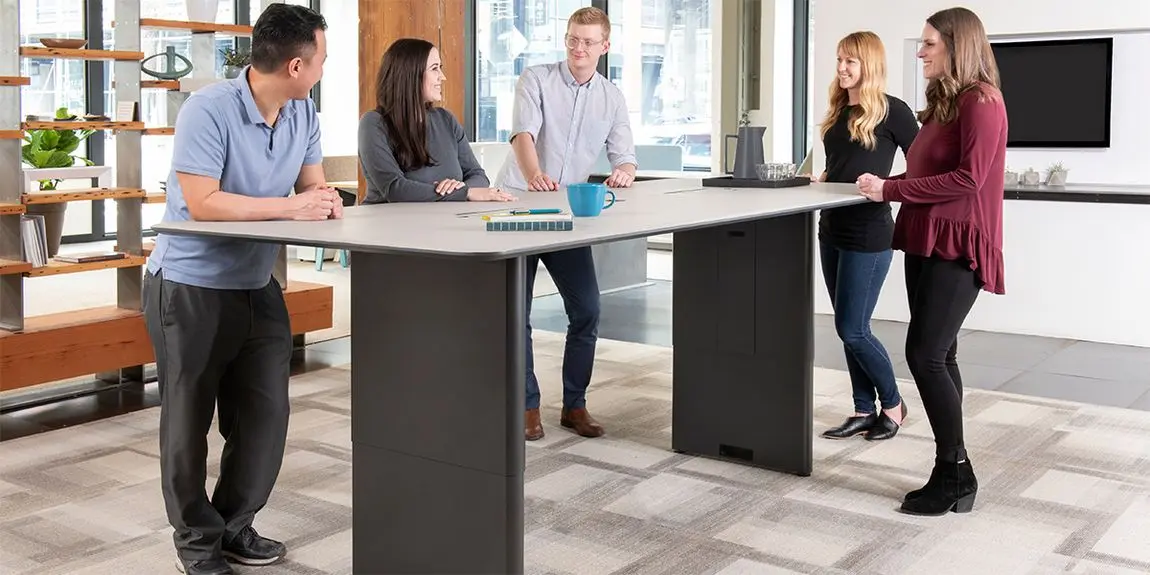
Flexible furniture plays a significant role in fostering collaboration. Traditional office layouts often separate employees into rigid workstations, making spontaneous interaction difficult. Flexible furniture enables organizations to create dynamic spaces that support teamwork.
Mobile desks, modular seating, and adjustable tables allow teams to quickly create collaborative environments for brainstorming sessions, meetings, or project work. When the workspace can be rearranged easily, collaboration becomes more natural and accessible.
Research into flexible workspace design has also found that adaptable environments can improve communication and strengthen a sense of community among employees.
6. Better Use of Office Space with Flexible Office Furniture
Office real estate is expensive, and many organizations are looking for ways to maximize their available space. Flexible office furniture makes it easier to use every square foot efficiently.
Instead of dedicating permanent space to specific functions, flexible layouts allow rooms and work areas to serve multiple purposes. A meeting area in the morning can become a collaborative workspace in the afternoon and a training area later in the day.
This level of versatility ensures that office space remains active and useful rather than underutilized.
7. Increased Focus and Concentration
.png)
Comfort and focus are closely connected. When employees are distracted by physical discomfort or poorly designed workstations, their ability to concentrate declines.
Ergonomic and adjustable furniture helps eliminate these distractions by allowing workers to customize their workspace to their body and task. When posture is supported and strain is minimized, employees can maintain concentration for longer periods and perform tasks more efficiently.
Flexible furniture also makes it easier to create different zones within the workplace—quiet spaces for focused work and open areas for collaboration, allowing employees to choose the environment that best suits their task.
8. Encourages Movement Throughout the Day
Traditional office environments often keep employees sitting in the same position for hours at a time. This sedentary behavior can negatively affect both physical health and energy levels.
Flexible office furniture encourages movement by allowing workers to shift between different postures and work positions. Sit-stand desks, adjustable chairs, and mobile workstations make it easier for employees to change positions throughout the day.
Movement improves circulation, reduces fatigue, and helps maintain energy levels during long workdays. It also supports mental clarity, which can lead to better decision-making and creativity.
9. Flexible Office Furniture Supports Hybrid and Activity-Based Work
.png)
Hybrid work has become a permanent feature of many organizations. Employees may split their time between home and the office, which means the workplace needs to accommodate different types of work rather than fixed desks.
Flexible furniture supports activity-based work environments, where employees choose the workspace that best fits their task, quiet zones for concentration, collaborative spaces for team discussions, and informal areas for creative thinking.
Research on activity-based workplaces shows that providing a variety of workspace options can improve satisfaction, communication, and efficiency.
This approach allows offices to serve as hubs for collaboration and innovation rather than simply places to sit at a desk.
10. Attracts and Retains Talent
.png)
Workplace design plays a significant role in employee satisfaction and retention. Today’s workforce increasingly expects workplaces that support comfort, flexibility, and well-being.
Modern, adaptable work spaces signal that an organization values its people and is willing to invest in their experience at work. When employees feel comfortable, supported, and empowered to work in ways that suit them, they are more likely to stay engaged and committed.
Flexible office furniture also contributes to a more modern, professional aesthetic, an important factor in attracting new talent and making a positive impression on clients and visitors.
The Future of Workplace Design
As organizations continue to evolve, so will the spaces where work happens. Flexible office furniture represents a shift away from rigid environments toward workplaces that adapt to people rather than forcing people to adapt to the space.
The most effective workplaces today are those that combine ergonomics, adaptability, and thoughtful design to support both individual productivity and team collaboration.
By investing in flexible office furniture, organizations can create environments that improve well-being, maximize productivity, and remain adaptable as business needs change. In a world where the nature of work continues to evolve, flexibility in the workplace isn’t just an advantage, it’s a necessity.
Want to learn more about successful office designs? Check out these related topics:


.png&w=750&q=75)