



The Return of Privacy: Why Personal Spaces Are Making a Comeback
.png&w=1920&q=75)
For more than a decade, the modern office has been shaped by a single dominant idea: openness. Walls were removed, cubicles were minimized, and organizations embraced open-plan layouts in an effort to foster collaboration, transparency, and innovation. The assumption was straightforward: if people worked in closer proximity, communication would improve, and ideas would flow more freely.
But over time, a different reality began to emerge. While open offices did increase visibility, they often came at the expense of focus, comfort, and control. Today, organizations are rethinking that tradeoff, and in the process, rediscovering the importance of privacy in the workplace.
This shift is not about abandoning collaboration. It is about recognizing that meaningful work requires more than just interaction. It requires space, both physical and psychological, to think, concentrate, and perform at a high level.
The Limits of Open-Plan Design
.png)
The appeal of open offices was rooted in a desire to break down silos and encourage spontaneous interaction. However, research has consistently shown that these environments can introduce significant challenges. A widely cited study from Harvard Business School found that face-to-face interactions actually decreased by about 70% after companies transitioned to open offices, as employees turned to digital communication to compensate for a lack of privacy.
At the same time, employees reported higher levels of distraction and reduced job satisfaction. According to a report by Gensler, one of the leading workplace research and design firms, the ability to focus is a critical driver of workplace effectiveness, yet many open environments fail to adequately support it. Their U.S. Workplace Survey highlights that employees who lack access to quiet, private spaces are significantly less productive and engaged.
These findings point to a fundamental issue: openness may increase exposure, but it does not necessarily improve how people work.
The Cognitive Cost of Distraction
The renewed emphasis on privacy is closely tied to what we now understand about attention and cognitive performance. Knowledge work, whether it involves analysis, writing, design, or strategy, depends on sustained focus. Interruptions, even brief ones, can disrupt that focus and make it difficult to return to a productive state.
Research from the American Psychological Association has shown that multitasking and frequent interruptions can reduce productivity and increase mental fatigue. When employees are constantly exposed to noise, movement, and conversation, their cognitive load increases, making it harder to concentrate on complex tasks.
Similarly, a study published in the Journal of Environmental Psychology found that a lack of acoustic privacy in open offices is strongly associated with decreased performance and higher stress levels. The issue is not just the presence of noise, but the unpredictability of it, such as conversations, phone calls, and background chatter that employees cannot control.
This is where privacy becomes essential. It provides the conditions necessary for deep work, allowing individuals to manage their attention and engage more fully with their tasks.
The Influence of Remote Work
The shift toward remote and hybrid work has accelerated this conversation. During the COVID-19 pandemic, millions of employees experienced a different way of working, one that often included greater control over their environment. While remote work introduced new challenges, it also revealed clear benefits, particularly in terms of focus and autonomy.
According to research from McKinsey & Company, many employees report higher productivity when working remotely, largely due to fewer interruptions and the ability to create a personalized workspace. This has changed expectations. Employees are no longer willing to accept environments that undermine their ability to concentrate.
As organizations encourage employees to return to the office, they are facing a new reality: the office must compete with the home. And one of the key advantages of home is privacy.
Redefining the Purpose of the Office
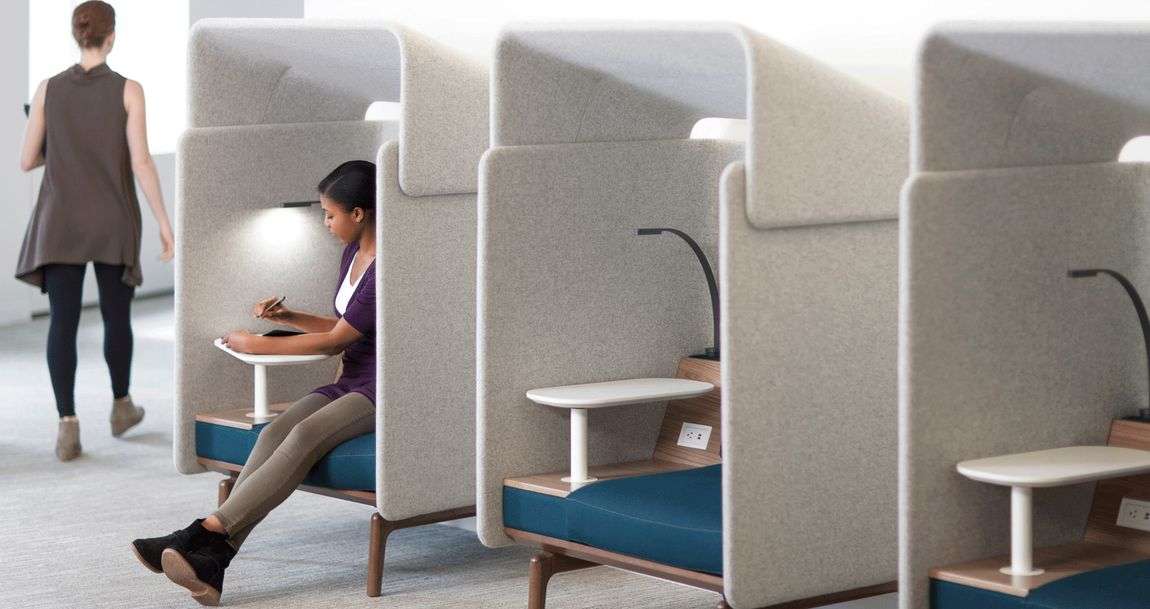
In response, organizations are beginning to rethink what the office is for. Rather than serving as a default location for all work, it is increasingly being designed as a flexible environment that supports a range of activities.
This includes collaboration, of course, but also individual focus, virtual communication, and moments of quiet reflection. The most effective workplaces are those that recognize these different needs and provide spaces accordingly.
The concept of activity-based working reflects this approach. Instead of assigning a single type of workspace to every employee, activity-based environments offer a variety of settings, allowing individuals to choose the space that best fits their task. Research supports this model, showing that employees are more engaged and productive when they have access to a mix of collaborative and personal spaces.
This is where the return of personal spaces becomes most visible. Organizations are introducing focus rooms, enclosed pods, quiet zones, and other forms of private or semi-private environments. These spaces are not meant to replace open areas, but to complement them, creating a more balanced workplace.
The Role of Acoustic and Visual Privacy
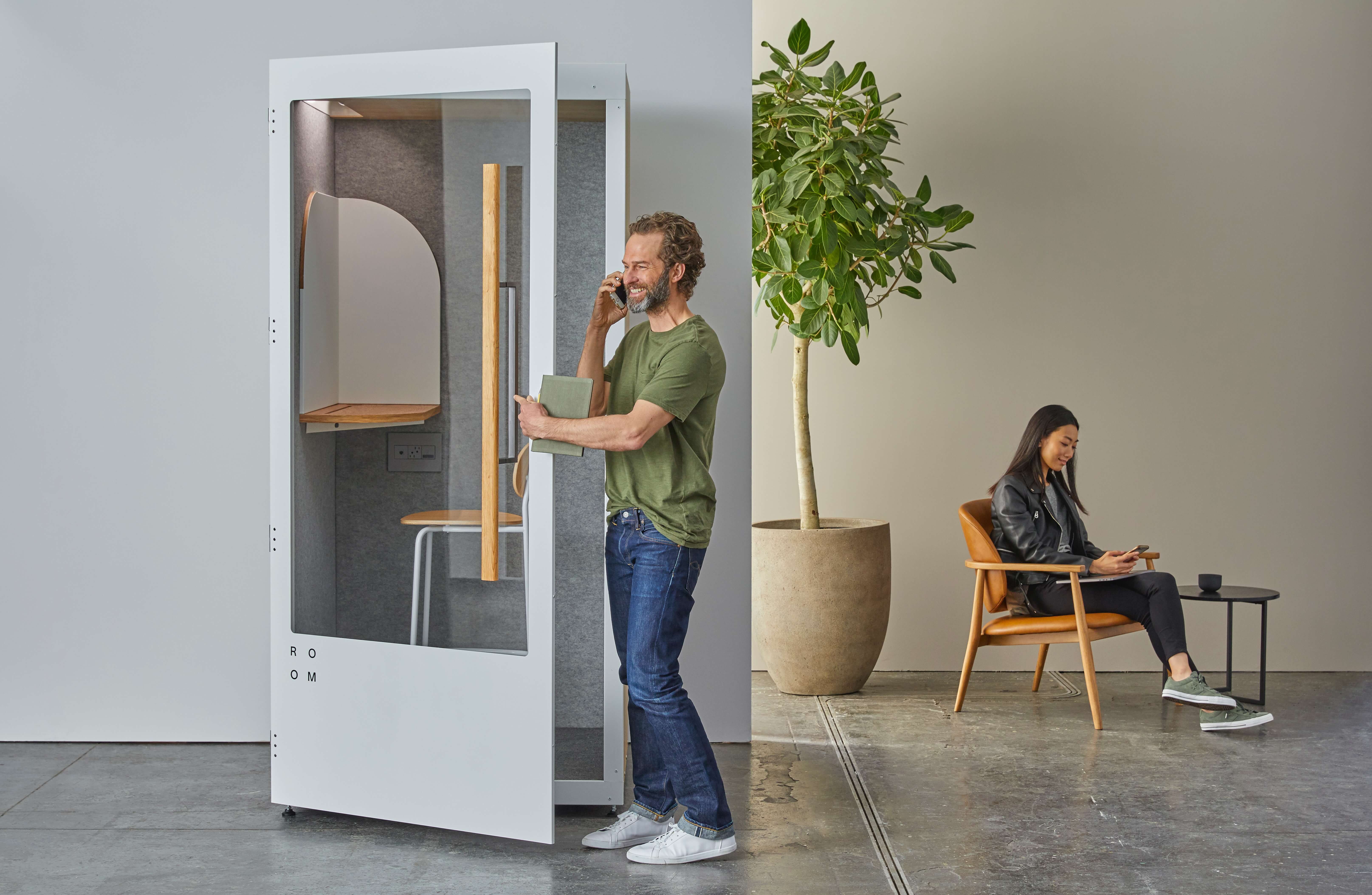
Privacy in the modern office extends beyond physical separation. It also includes acoustic and visual elements that influence how people experience a space.
Noise remains one of the most common complaints in open offices. According to the International Facility Management Association, unwanted noise is a top source of workplace dissatisfaction, affecting both concentration and overall well-being. Even when employees are not directly involved in conversations, background noise can be enough to disrupt focus.
To address this, organizations are investing in acoustic solutions such as sound-absorbing materials, spatial zoning, and enclosed work areas. These design strategies help reduce distractions and create environments where employees can control their level of exposure.
Visual privacy is equally important. When employees feel constantly visible, they may become more self-conscious and less comfortable engaging in deep or creative work. Providing spaces where individuals can step away from the open floor can help alleviate this pressure and support more natural work patterns.
The Psychological Importance of Privacy
.png)
Beyond its functional benefits, privacy plays a critical role in psychological well-being. The ability to withdraw, even temporarily, is essential for managing stress and maintaining mental clarity.
Research from Cornell University has shown that employees who have access to private spaces report lower stress levels and higher job satisfaction. These environments allow individuals to regulate their social interactions, take breaks from stimulation, and recharge when needed.
In contrast, environments that lack privacy can create a sense of constant exposure. This can lead to fatigue, reduced motivation, and even burnout over time. As organizations place greater emphasis on employee well-being, the importance of these factors becomes increasingly clear.
Moving Beyond One-Size-Fits-All Design
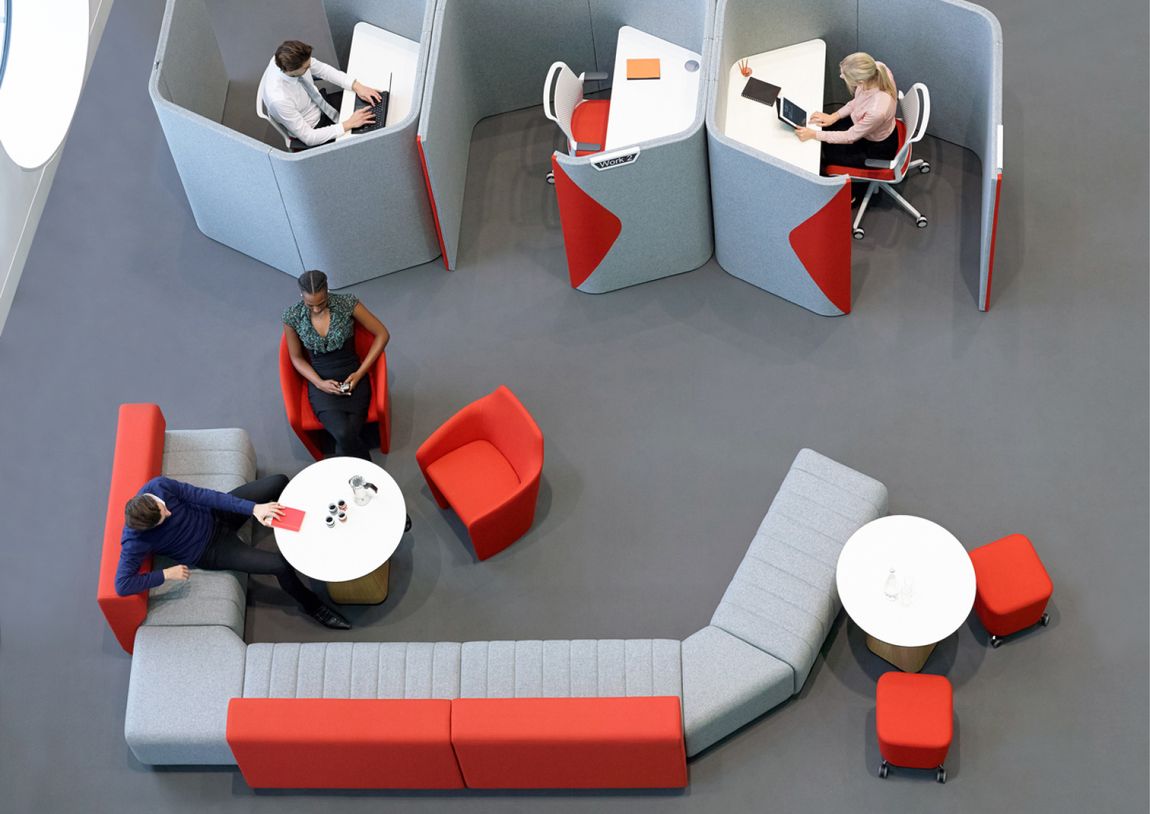
The return of privacy is also part of a broader shift away from standardized workplace models. For many years, efficiency and cost considerations led organizations to adopt uniform layouts that maximized density. While these approaches may have reduced real estate costs, they often failed to account for the diverse needs of employees.
Today, there is a growing recognition that flexibility is more valuable than uniformity. Employees differ in how they work, and even within the same role, their needs can change throughout the day. A single type of workspace cannot effectively support this level of variability.
By incorporating a mix of open and private spaces, organizations can create environments that are more adaptable and inclusive. This approach not only improves individual performance but also enhances the overall workplace experience.
Privacy as a Competitive Advantage
.png)
In a hybrid work environment, the office is no longer mandatory. It is a choice. And that choice is influenced by how well the workplace supports employees’ needs.
Organizations that fail to provide adequate privacy may find it difficult to attract employees back to the office. On the other hand, those that offer a thoughtful balance of collaboration and focus are more likely to create environments that people want to be part of.
This makes privacy more than just a design consideration; it becomes a strategic advantage. It signals that an organization understands how work is changing and is willing to invest in creating conditions that support success.
A More Balanced Future
The return of privacy does not represent a rejection of open offices. Instead, it reflects a more balanced and informed approach to workplace design. Collaboration remains essential, but it must be supported by environments that allow for concentration and autonomy.
As organizations continue to evolve, the most effective workplaces will be those that embrace this balance. They will provide spaces for connection and spaces for focus, recognizing that both are necessary for high performance.
Ultimately, the shift toward personal spaces is about aligning the workplace with the realities of modern work. It acknowledges that productivity is not just a function of proximity, but of environment. And when that environment supports both interaction and independence, it enables people to do their best work.
In that sense, the return of privacy is not just a trend. It is a reflection of a deeper understanding of what people need to thrive at work—and a sign of where the workplace is headed next.
Want to learn more about the modern office and designing for functionality? Check out these related posts: