



Designing for Focus in a Distracted Workplace

Distraction has become one of the defining challenges of modern work. Notifications buzz, meetings multiply, and open environments, once celebrated for collaboration, often make sustained concentration feel like a luxury. For many organizations, the problem isn’t employee motivation or capability. It’s the environment itself.
At StrongProject, we believe focus isn’t something employees should have to fight for. It should be built into the workplace by design.
Focus Is a Design Problem, Not a Personal Failure
When people struggle to concentrate, the default response is often individual: time management training, productivity apps, or gentle reminders to “block your calendar.” While those tools can help, they overlook a critical truth: people do their best work when the environment supports it.
Workplace design constantly sends signals about what behaviors are expected. A space optimized for movement, conversation, and visibility encourages interaction. A space designed for focus does something different: it protects attention.
Designing for focus means intentionally shaping physical spaces to reduce cognitive load, manage sensory input, and give people control over how they work.
The High Cost of Constant Distraction
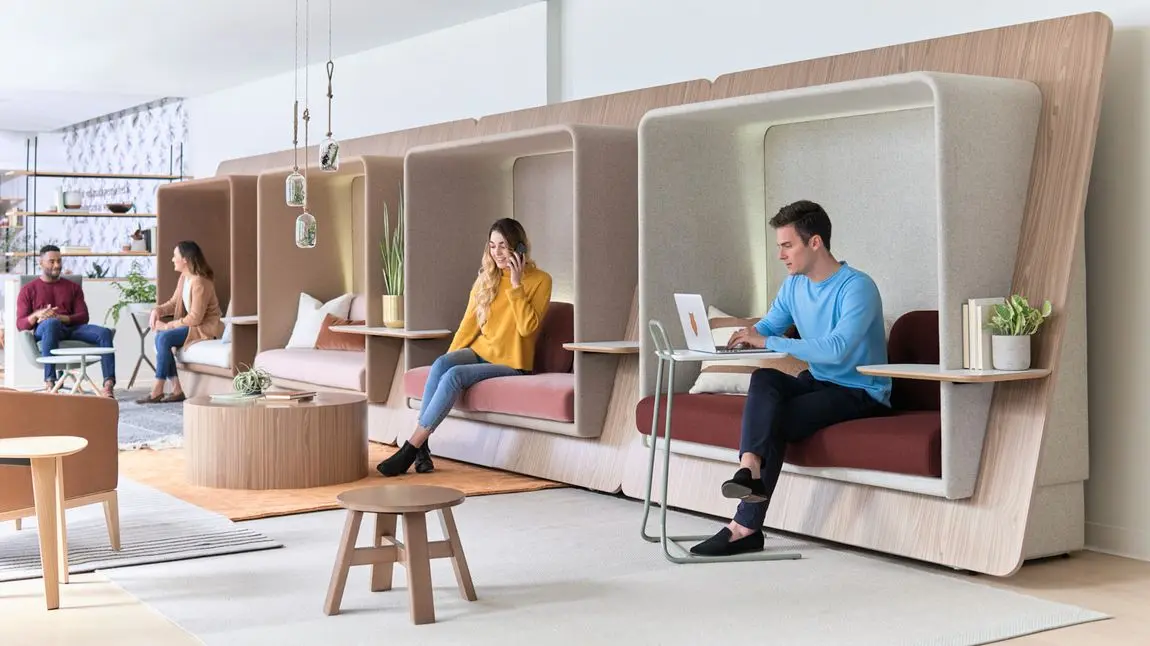
Research consistently shows that interruptions fragment attention and reduce the quality of work. Each disruption, whether it’s a nearby conversation, a meeting room echo, or visual clutter, forces the brain to reset. Over time, this leads to fatigue, frustration, and lower performance.
The cost isn’t just individual productivity. Distracted workplaces often experience:
Increased errors and rework
Longer project timelines
Higher stress and burnout
Reduced engagement and job satisfaction
Designing for focus is not about eliminating collaboration or conversation. It’s about creating balance—spaces that support deep work alongside spaces built for connection.
Start With Activity-Based Design
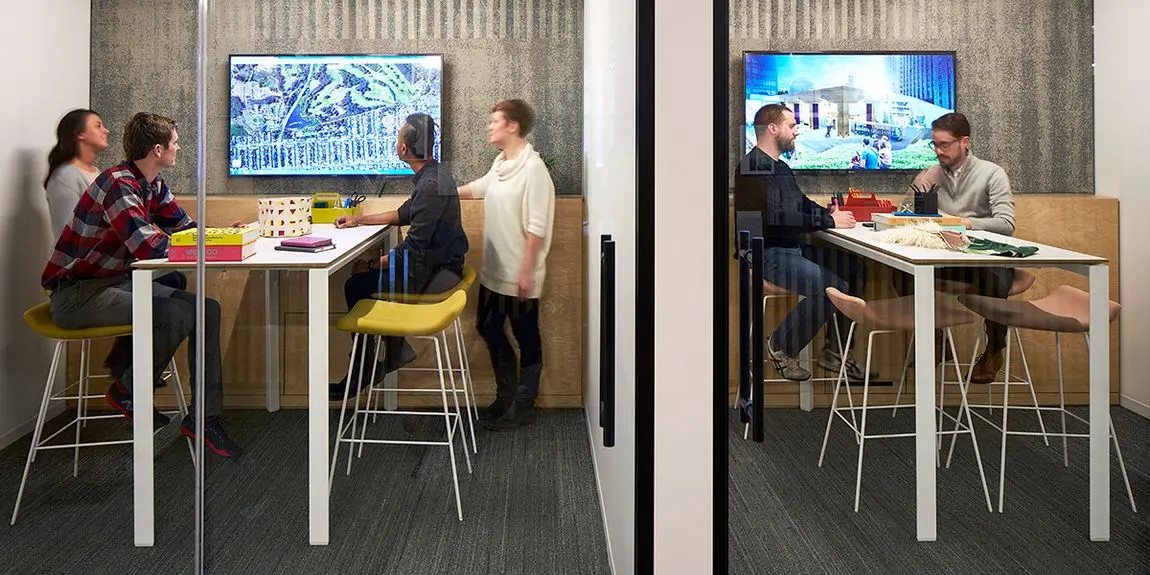
One of the most effective ways to support focus is to design around how people work rather than where they sit.
Activity-based design recognizes that employees shift between different modes throughout the day: focused work, collaboration, learning, and recovery. Instead of forcing all tasks into one type of space, organizations can provide environments tailored to each activity.
For focus, this often includes:
Quiet zones or libraries for heads-down work
Enclosed rooms for individual concentration
Phone booths for short, interruption-free tasks
Workstations positioned away from high-traffic areas
When people know there is a place designed specifically for focus, they’re more likely to protect that time and produce higher-quality work.
Sound Is the Silent Productivity Killer
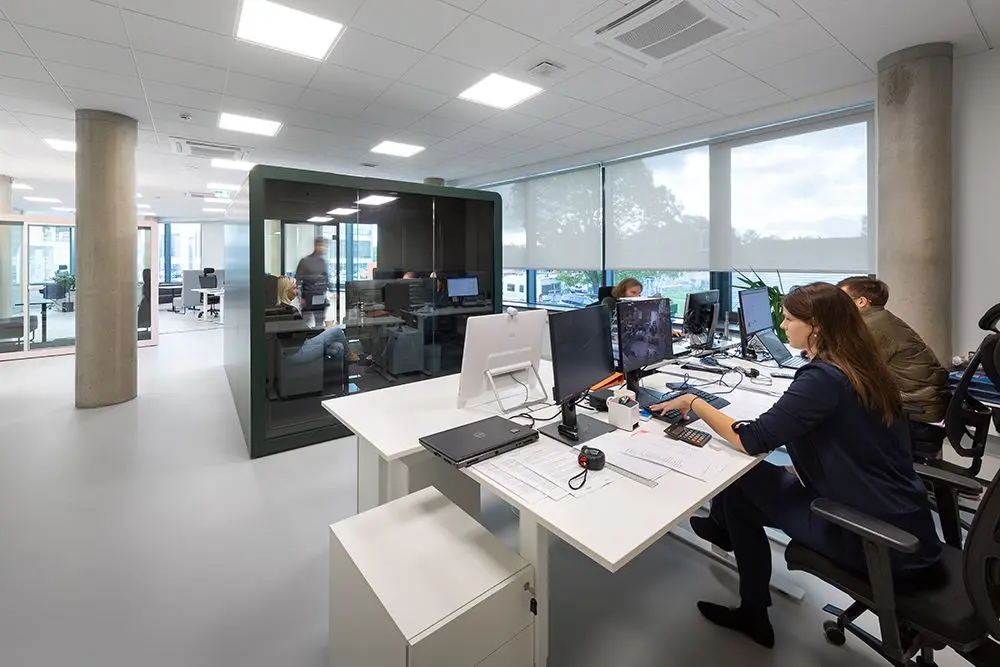
Noise is one of the most common complaints in modern offices, and one of the most overlooked design challenges. Conversations, HVAC systems, ringing phones, and hard surfaces all contribute to sound that disrupts concentration.
Designing for focus requires a thoughtful acoustic strategy. This can include:
Acoustic panels and wall treatments to absorb sound
Upholstered furniture that reduces echo
Area rugs or soft flooring materials
Acoustic screens or dividers between workstations
Enclosed focus rooms for deep work
Importantly, acoustics should be integrated into the overall design, not treated as an afterthought. When sound is managed well, employees experience less stress and greater mental clarity.
Visual Calm Matters More Than You Think
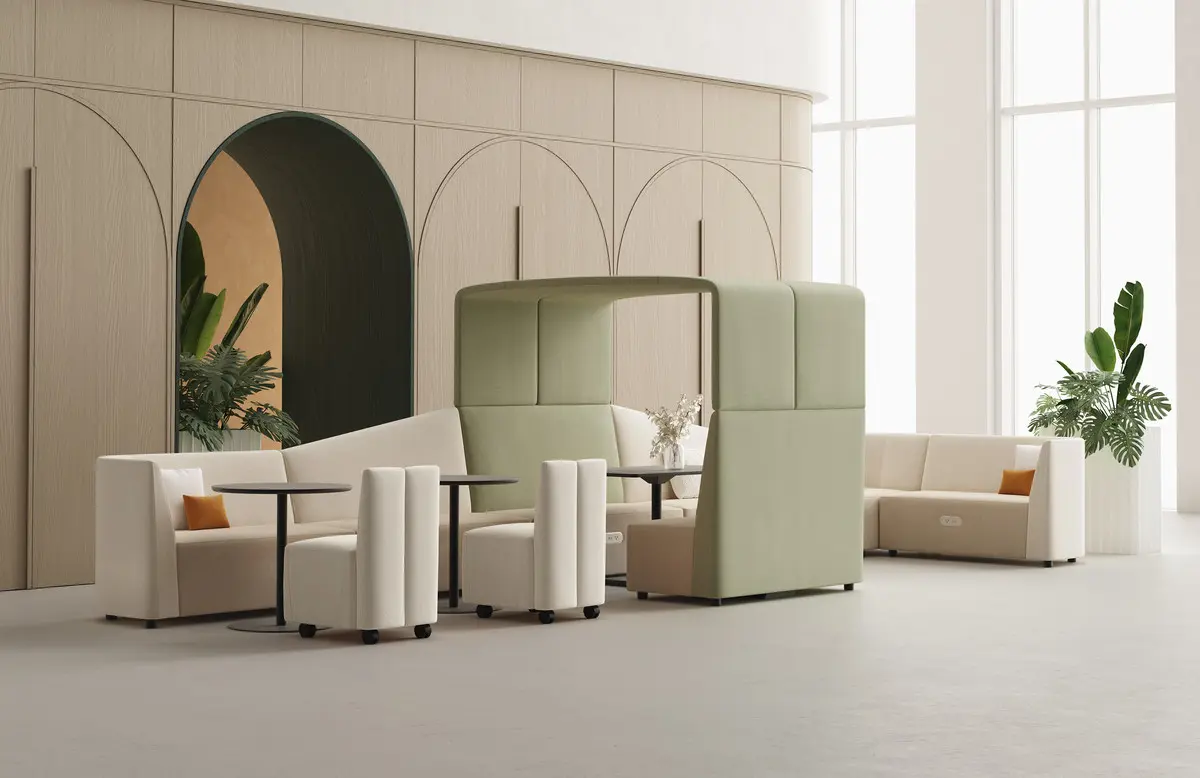
Distraction isn’t only auditory. Visual noise, constant movement, cluttered spaces, and overly busy layouts also pull attention away from work.
Designing for focus means creating visual calm. That doesn’t mean sterile or boring spaces. It means thoughtful choices:
Clear sightlines with fewer visual interruptions
Defined zones that reduce unnecessary movement
Storage solutions that keep clutter out of view
Consistent, calming color palettes
Lighting that reduces glare and eye strain
When the environment feels orderly, the brain expends less energy filtering out distractions—and more energy on meaningful work.
Give Employees Control Over Their Environment
One of the most powerful design principles for focus is autonomy. People differ in how they concentrate best, and no single setup works for everyone.
Providing choice allows employees to adapt their environment to their needs. This can include:
Adjustable furniture for ergonomic comfort
Multiple workspace options throughout the office
Lighting controls where possible
Moveable screens or partitions
Control increases a sense of ownership and reduces stress. When employees can choose a space that matches their task, focus becomes easier and more sustainable.
Focus and Collaboration Can Coexist

A common concern is that designing for focus will undermine collaboration. In reality, the opposite is often true.
When collaboration spaces are clearly defined and separated from focus areas, both modes improve. Teams know where conversation is encouraged and where quiet is respected. Meetings become more intentional, and focused work becomes protected rather than interrupted.
StrongProject often helps organizations create a clear spatial rhythm:
Active, collaborative zones near entrances or central hubs
Transitional spaces that buffer sound and movement
Quiet zones positioned deeper within the office
This layering supports a healthier flow of work throughout the day.
Designing for Focus Is Designing for Well-Being
Sustained distraction doesn’t just impact output; it impacts mental health. Constant noise, interruptions, and lack of privacy increase stress hormones and reduce a sense of control.
By contrast, spaces designed for focus support:
Reduced cognitive fatigue
Lower stress levels
Greater satisfaction and engagement
Higher-quality thinking and creativity
In a world where burnout is a growing concern, designing for focus is a tangible way organizations can support employee well-being.
Focus Is a Competitive Advantage
As work becomes more complex, the ability to think deeply is increasingly valuable. Organizations that protect focus gain an edge in innovation, problem-solving, and decision-making.
Designing for focus isn’t about returning to closed-off offices or enforcing silence. It’s about intentional design that respects how the human brain works.
At StrongProject, we help organizations create environments where focus is possible, collaboration is purposeful, and people can do their best work without fighting their surroundings.
Because when the workplace supports focus, performance follows.
Want to learn more about the modern office and designing for functionality? Check out these related posts:


.png&w=750&q=75)