



The Future of Training Rooms
.png&w=1920&q=75)
For years, training rooms have looked the same: rows of tables, stackable chairs, a screen at the front, maybe a flip chart if someone was feeling ambitious. They were functional, predictable, and, let’s be honest, forgettable.
But the way we learn at work has changed. And the spaces designed to support learning are finally starting to catch up.
Training Rooms aren't about fitting more people into a room or upgrading the projector. It’s about creating environments that actively support how workers learn, collaborate, reflect, and apply new ideas. It’s about designing spaces that recognize learning as a human experience, not just a scheduled event.
We believe training rooms are becoming one of the most important spaces in the modern workplace. Here’s why, and what the future holds.
Learning Has Changed. Training Rooms Must Follow.
.png)
Workplace learning used to be boring. You went to a training, took notes, and returned to your desk. Today, learning is continuous, collaborative, and deeply connected to real work.
Modern training sessions are:
More interactive
More discussion-based
More hands-on
People aren’t just absorbing information; they’re practicing skills, challenging assumptions, and engaging with peers. That requires a very different environment than a static, lecture-style room.
The future training room supports movement, conversation, and adaptability. It flexes with the learning process instead of constraining it.
Flexibility Is No Longer Optional
.png)
If there’s one defining feature of the future training room, it’s flexibility.
Training spaces need to support:
Small group discussions
Large group instruction
Individual reflection
Collaborative problem-solving
Hybrid participation
That’s impossible with fixed furniture and rigid layouts.
Mobile tables, lightweight chairs, and modular configurations allow rooms to transform quickly, sometimes multiple times in a single session. A space that can shift from classroom-style to team pods to open discussion encourages facilitators to design more engaging experiences and gives participants permission to move, reconfigure, and interact.
Flexibility doesn’t just support better learning. It signals that learning itself is dynamic.
Comfort Drives Engagement
.png)
Comfort is often treated as a “nice to have” in training environments. In reality, it’s foundational.
When people are uncomfortable, physically or mentally, their ability to focus, participate, and retain information drops. Hard chairs, cramped layouts, poor lighting, and limited personal space all create friction that distracts from learning.
The future training room prioritizes:
Ergonomic seating
Thoughtful table heights and spacing
Access to natural light
Temperature and acoustic comfort
Comfort isn’t about luxury. It’s about reducing unnecessary cognitive load so learners can focus on what actually matters.
Movement Is Part of Learning
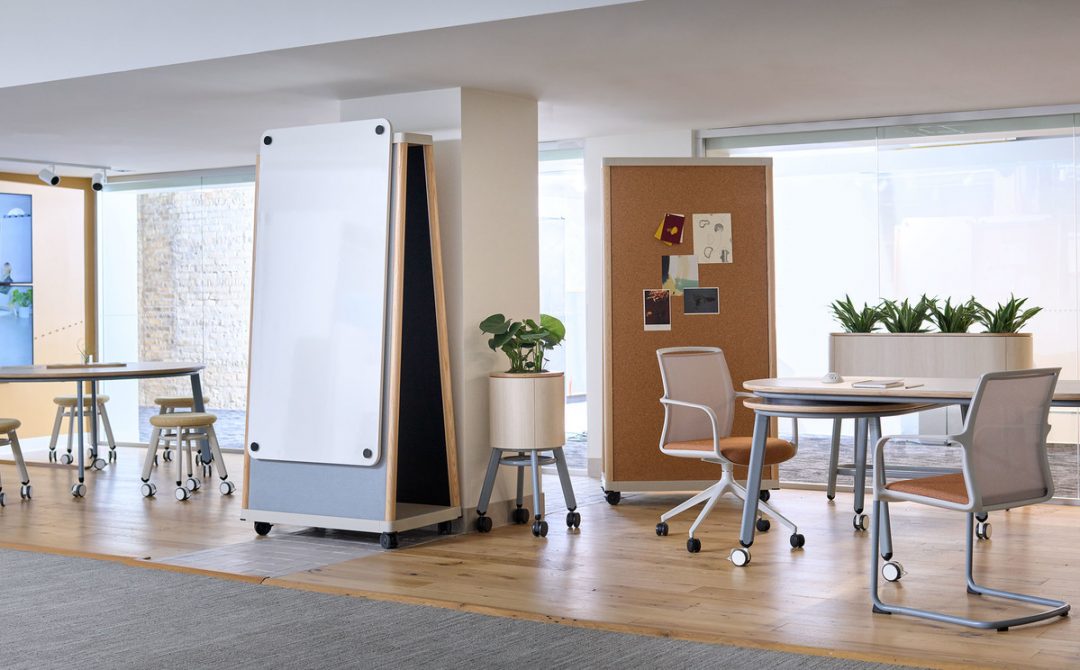
Learning is not a sedentary activity, even if training rooms have historically treated it that way.
Research consistently shows that movement supports cognition, creativity, and memory. Yet many training spaces still assume participants will sit still for hours at a time.
Future-focused training rooms:
Encourage participants to stand, shift, and move
Include furniture that supports both seated and standing work
Allow easy reconfiguration without disruption
When movement is built into the space, facilitators can design sessions that feel more energizing and less exhausting. Learners stay engaged longer and leave with more than just a full notebook.
Technology Should Support, Not Dominate
Training rooms need technology. But the future isn’t about more screens, it’s about smarter integration.
The most effective training spaces make use of technology:
Easy to access
Intuitive to use
Invisible when it’s not needed
Wireless connectivity, multiple display options, and seamless hybrid tools allow facilitators to focus on learning instead of troubleshooting. Power access is built into tables and layouts instead of being tacked on as an afterthought.
Most importantly, technology should support human connection, not replace it. The best training rooms still center on conversation, collaboration, and shared experience.
Designing for Psychological Safety
Learning requires vulnerability. People need to ask questions, try new skills, and occasionally get things wrong. That only happens in environments that feel safe.
The future of training rooms includes design choices that support psychological safety:
Layouts that encourage eye contact and participation
Smaller breakout areas for quieter voices
Clear sightlines and equitable seating
Spaces that feel intentional, not intimidating
When the environment communicates “you belong here,” learners are more likely to engage fully—and learning outcomes improve as a result.
One Room, Many Purposes
Training rooms are no longer used once a quarter and are locked the rest of the time. In forward-thinking organizations, these spaces serve multiple functions:
Team offsites
Workshops
Strategy sessions
Town halls
Innovation labs
That means training rooms must be designed as multi-purpose environments that can support different types of work without constant resets.
Well-designed training spaces increase utilization and maximize return on investment—without sacrificing the quality of the learning experience.
Inclusivity Is a Design Requirement
The future training room is inclusive by design.
That means considering:
Neurodiverse learning needs
Different physical abilities
Varied communication styles
Cultural differences in participation
Adjustable furniture, varied seating options, quiet zones, and clear visual cues all help create environments where more people can learn effectively.
Inclusive spaces don’t call attention to difference. They normalize choice.
Learning Spaces Reflect Organizational Values
.png)
Training rooms send a powerful signal about how much an organization values growth and development.
A neglected, uncomfortable space communicates that learning is an obligation. A thoughtfully designed environment communicates that learning matters—that people matter.
Employees notice. And they draw conclusions.
The future training room is a tangible expression of an organization’s commitment to continuous improvement, well-being, and human-centered work.
Make the Most of Your Training Room
Training rooms are not just functional spaces.
When designed intentionally, training environments:
Improve engagement and retention
Support well-being and focus
Encourage collaboration and trust
Reinforce organizational culture
The future of training rooms isn’t about trends or aesthetics. It’s about aligning space with purpose, and creating environments that support how people actually learn and work today.
Training rooms are no longer just places where information is delivered. They’re where ideas take root. Where skills are practiced. Where culture is reinforced in real, tangible ways.
As organizations navigate constant change, the ability to learn together, effectively, and sustainably has become a competitive advantage. And the spaces that support that learning matter more than ever.
When training rooms are designed thoughtfully, they do more than host sessions. They invite participation. They signal that growth isn’t an afterthought. It’s part of the work.
Contact us today to learn more about how we can transform your office!
Interested in learning more about modern office design? Check out these related posts:


