



What Is Acoustic Furniture? A Guide to Sound Management in Modern Offices
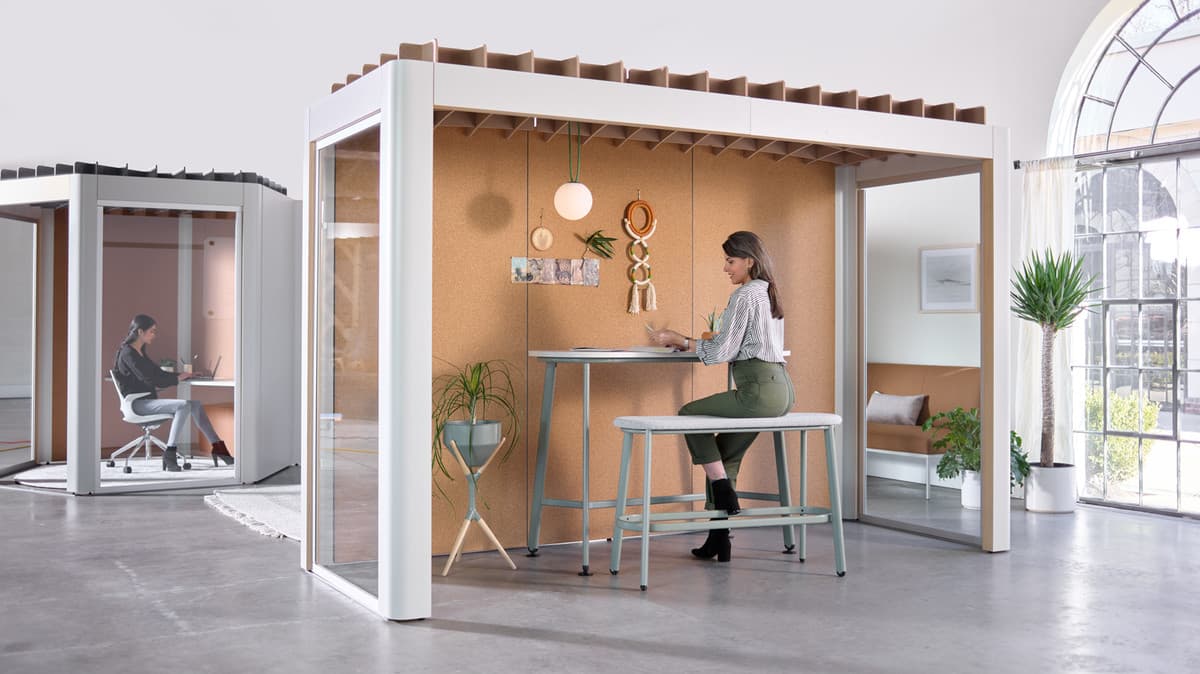
If you walk into a busy office, you’ll probably hear a lot more than you expect. Phones are ringing, people are talking, keyboards are clicking, chairs are moving, and someone is probably on a video call somewhere. None of these sounds are necessarily a problem on their own. But put them all together, and they can make it surprisingly difficult to concentrate.
That’s one of the biggest challenges facing modern workplaces. As offices have become more open, collaborative, and flexible, managing sound has become just as important as choosing desks and chairs. This is where acoustic furniture comes in.
Acoustic furniture is designed to help manage sound within an office environment. Rather than simply trying to eliminate noise, acoustic solutions can absorb, block, or reduce unwanted sound while creating more comfortable spaces for employees to work, collaborate, and communicate.
The good news? Acoustic furniture doesn't have to look like something you'd find in a recording studio. Modern acoustic office furniture combines sound-management technology with thoughtful design, enabling quieter, more productive workspaces without sacrificing style.
What Is Acoustic Furniture?
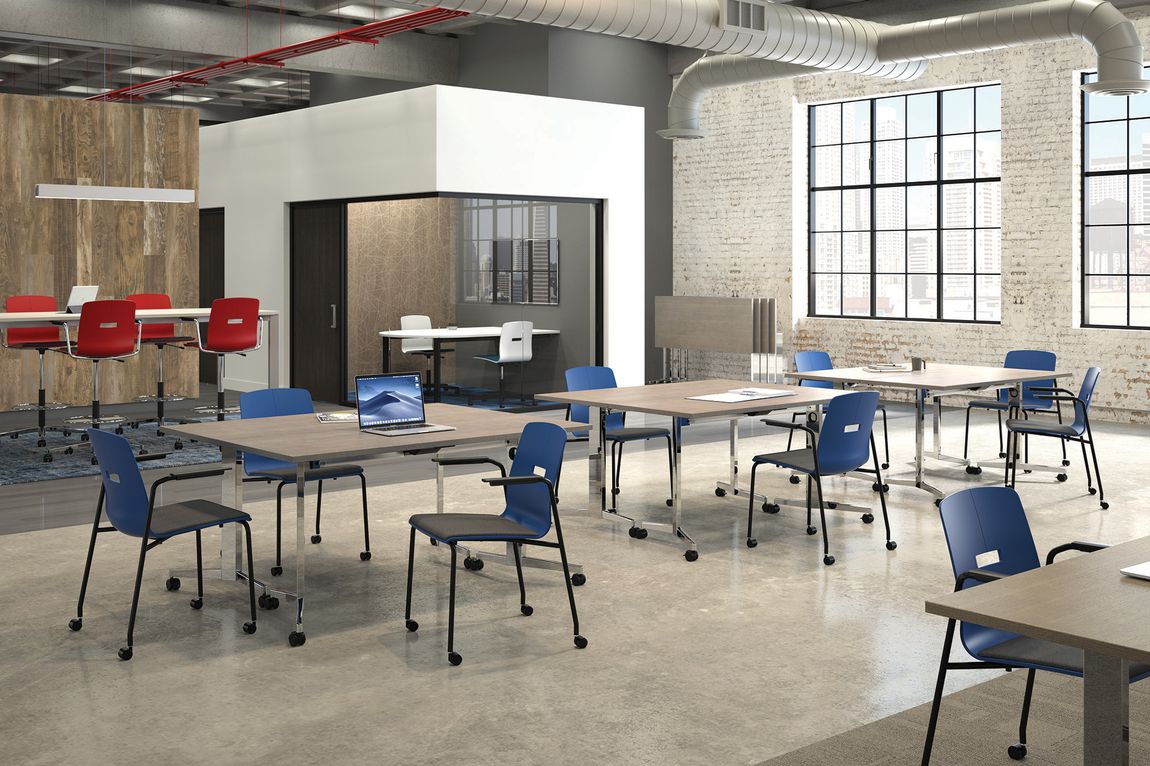
Acoustic furniture refers to office furniture and workspace products that are specifically designed to help control sound. These products can include privacy booths, acoustic panels, upholstered seating, high-back lounge furniture, workstation screens, room dividers, and other pieces that help absorb or reduce noise.
Traditional office furniture is primarily designed around function. A desk gives you a place to work. A chair gives you a place to sit. A conference table provides a place for meetings. Acoustic furniture takes that concept a step further by considering what happens to sound once it enters the space.
Some acoustic products absorb sound, reducing the amount of noise that bounces around a room. Others create physical barriers between employees or work areas. Some do both. This is particularly useful in open-plan offices where there are fewer walls separating different activities. Instead of completely redesigning the office with permanent walls, businesses can use acoustic furniture to create separation where it's needed.
Why Does Office Acoustics Matter?
.png)
Noise is one of those workplace issues that's easy to underestimate. Employees may not complain about every distraction, but that doesn't mean those distractions aren't affecting their work.
Imagine you're trying to write an important report while two coworkers are having a conversation several feet away. You might be able to hear every word. Even if you aren't participating in the conversation, your brain has to work around it. Now imagine that happening throughout the day.
Open offices can be excellent for collaboration and communication, but they can also create challenges for employees who need periods of focused work. Video calls add another layer because employees may be participating in virtual meetings while other people are working nearby. Good office acoustics can help create a better balance.
Instead of designing an office that is completely silent, the goal is to create different acoustic environments for different activities. Collaborative areas can remain energetic and social, while focused work areas provide more privacy and sound control. That's where acoustic office furniture becomes particularly valuable.
How Does Acoustic Furniture Work?
.png)
There are several ways acoustic furniture can help manage sound, and understanding the difference can make it easier to determine what your office actually needs.
One of the most common approaches is sound absorption. Materials such as acoustic fabric, felt, foam, and other specialized materials can absorb sound energy rather than allowing it to bounce around the room. Think about an empty room with hard floors, glass walls, and bare surfaces. Sound can travel easily and reflect off those surfaces, creating an echo or general feeling of loudness. Now imagine that same room with upholstered furniture, acoustic panels, carpeting, and other sound-absorbing materials. The environment can feel noticeably different.
Another approach is sound blocking. Privacy booths, high-backed seating, workstation dividers, and room partitions can physically interrupt the path sound takes through a space. Many modern acoustic products combine these strategies to create designated areas for private conversations, focused work, or meetings.
Acoustic Furniture for Open Offices
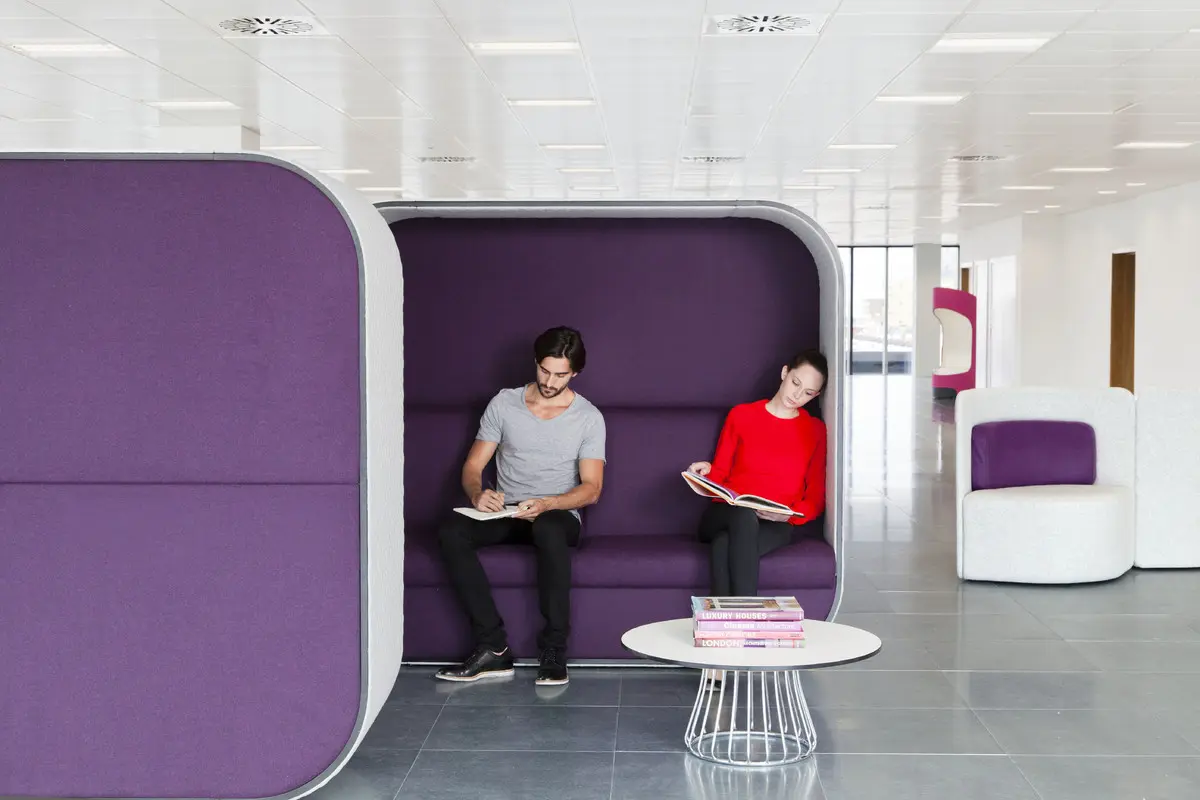
Open offices aren't going away, and they don't necessarily need to. The key is designing them thoughtfully.
One of the biggest advantages of acoustic furniture is its ability to introduce zones into an open workspace without requiring permanent construction. For example, a company might have an open area with individual workstations in the center, collaborative seating along one wall, and several acoustic privacy booths nearby.
The result is a workspace that can support multiple activities without requiring every activity to happen in the same environment. Acoustic workstation screens can provide a degree of separation between employees. High-back lounge seating can create a more private conversation area. Acoustic dividers can help separate collaborative spaces from focused work areas.
This approach also gives businesses flexibility. If the company's needs change, furniture can often be moved or reconfigured without the disruption and expense associated with remodeling.
Acoustic Privacy Booths and Phone Booths
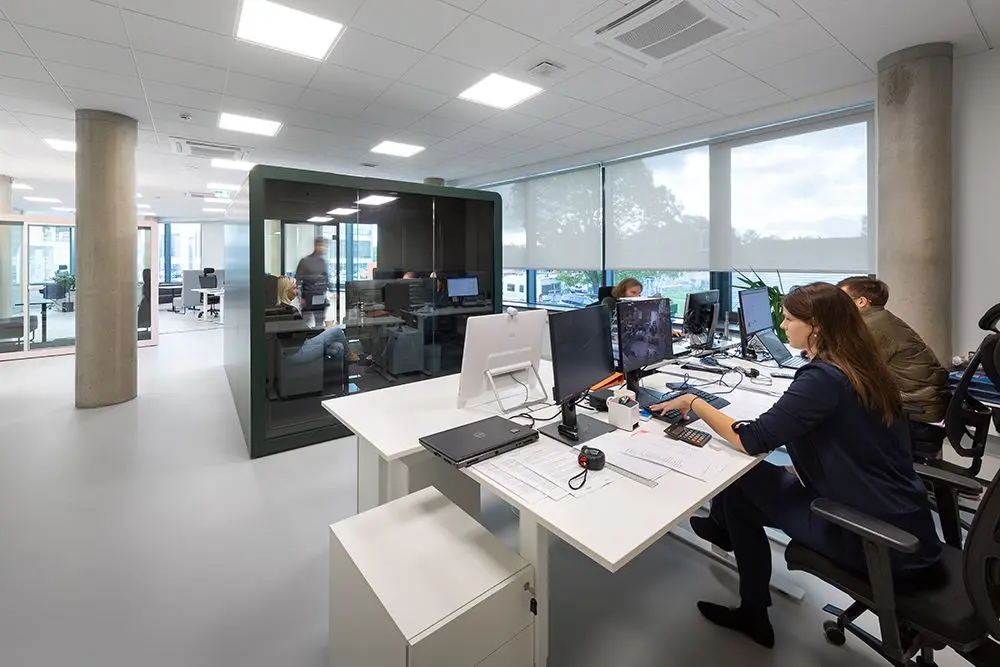
One of the most recognizable forms of acoustic office furniture is the privacy booth or office phone booth. These enclosed or semi-enclosed spaces provide employees with a dedicated area for phone calls, video meetings, or focused work.
Think about how many virtual meetings take place in a modern office. An employee might have a Zoom or Teams meeting scheduled while several coworkers are working around them. Taking that meeting from a workstation can create distractions in both directions.
The person on the call may struggle to hear the conversation, while coworkers may be distracted by the employee speaking. An acoustic phone booth creates another option.
Instead of leaving the office every time someone needs privacy, employees can step into a designated space for a call or meeting. For businesses with hybrid teams, these spaces can be particularly useful because video conferencing has become a normal part of everyday work.
Acoustic Furniture Doesn't Mean Boring Furniture
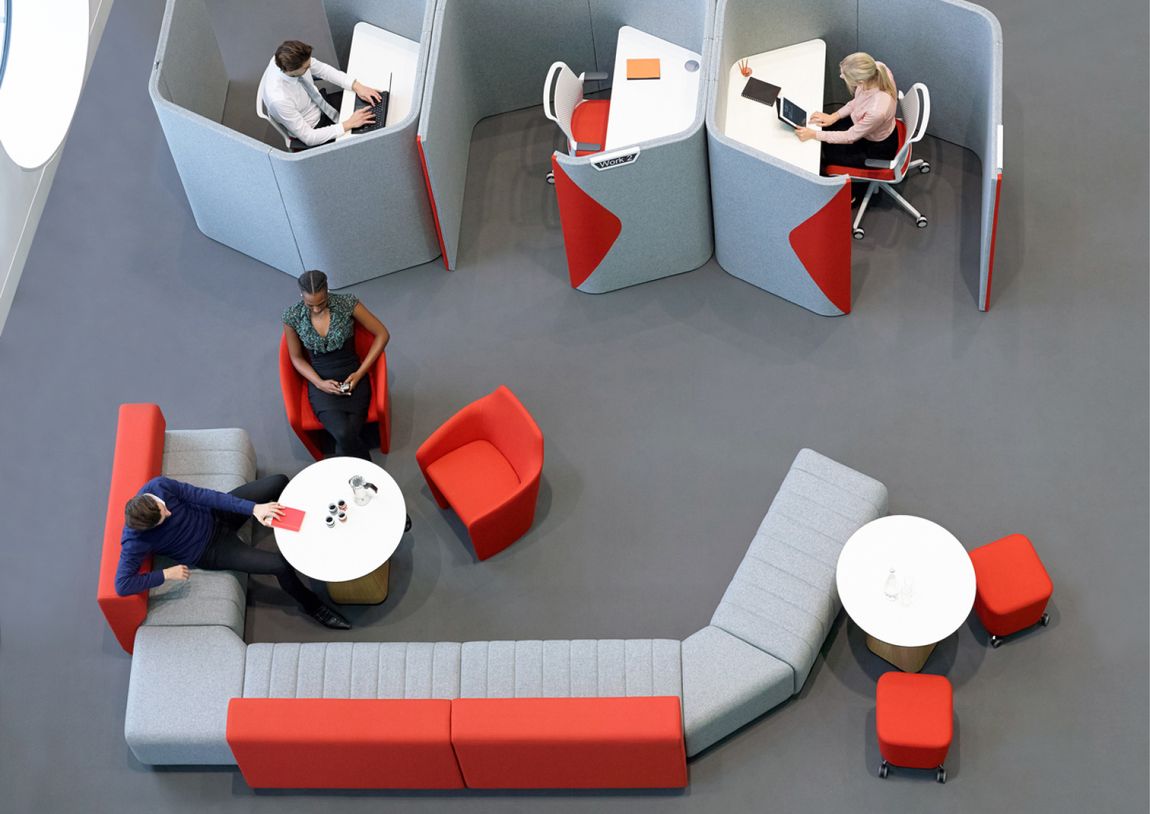
There is an old stereotype that anything designed to improve office acoustics must look industrial or unattractive. Modern acoustic furniture has largely left that idea behind.
Today, acoustic solutions can be integrated into contemporary office designs through different shapes, materials, textures, and configurations. Acoustic panels can become visual design elements. Privacy booths can act as architectural features. Upholstered seating can add color and comfort while also helping absorb sound. This matters because office design affects more than acoustics.
Employees spend a significant amount of their day in the workplace, so businesses want environments that feel comfortable, professional, and inviting. Furniture needs to solve practical problems while still fitting the company's overall aesthetic.
Acoustic furniture makes it possible to address sound management without making the office feel like a collection of technical equipment.
How Acoustic Furniture Can Support Productivity
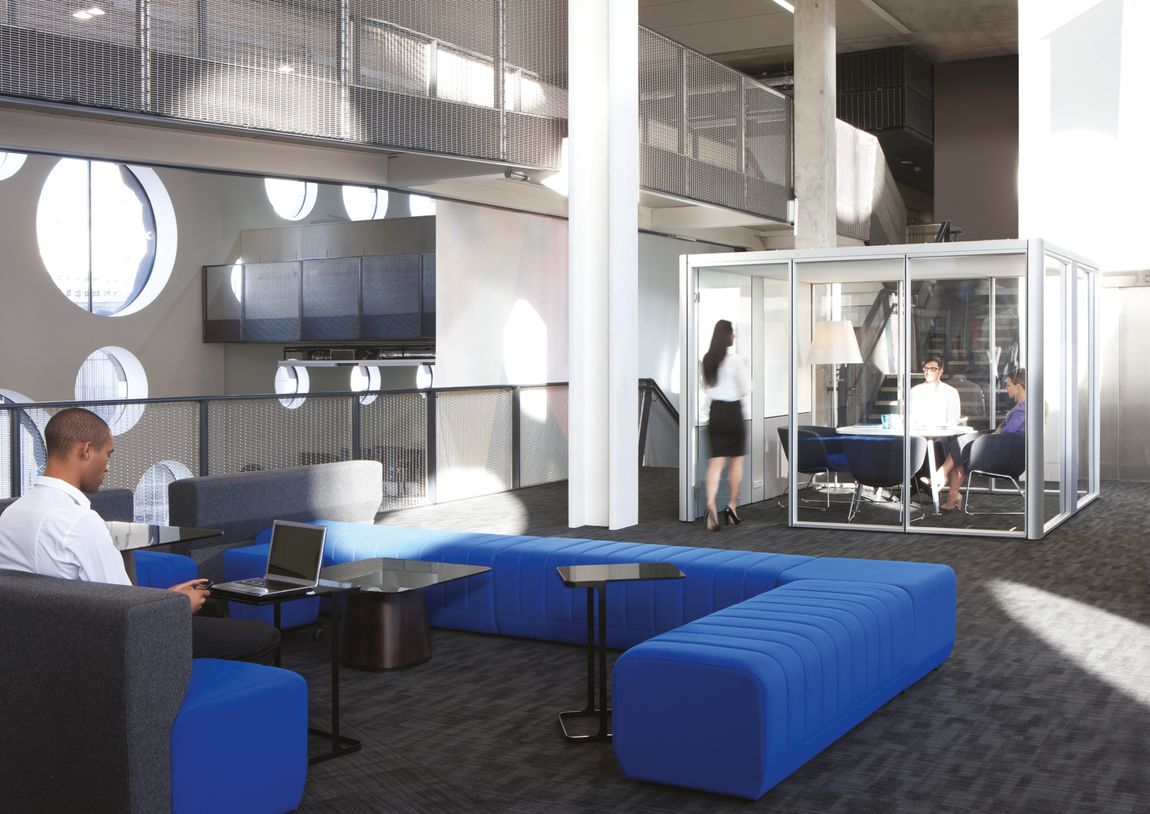
No single piece of furniture is going to transform productivity overnight. However, creating an environment where employees can choose the right space for the task at hand can make a meaningful difference.
Someone working on a complex project may need quiet and privacy. Someone brainstorming with a team may need an open collaborative environment. Someone taking a client call may need a space where they can speak without worrying about disturbing everyone around them. A well-designed office gives employees options.
That's an important distinction. The goal of acoustic design isn't necessarily to make every part of the office quiet. It's to give people more control over their environment. When employees have access to spaces designed for different activities, they don't have to force every type of work into the same physical setting.
Acoustic Furniture and Employee Privacy
Sound management and privacy often go hand in hand. A private conversation isn't necessarily confidential simply because two people are sitting together. If everyone around them can hear the conversation, the space isn't particularly private. Acoustic furniture can help create areas where conversations are less exposed.
This can be useful for everything from employee discussions and interviews to client calls and sensitive business conversations. Privacy booths, acoustic partitions, and high-backed seating can create physical and acoustic separation without requiring a permanent enclosed room.
For companies working with confidential information, client relationships, or sensitive employee matters, having appropriate spaces for private conversations is an important part of office planning.
How to Add Acoustic Furniture to Your Office
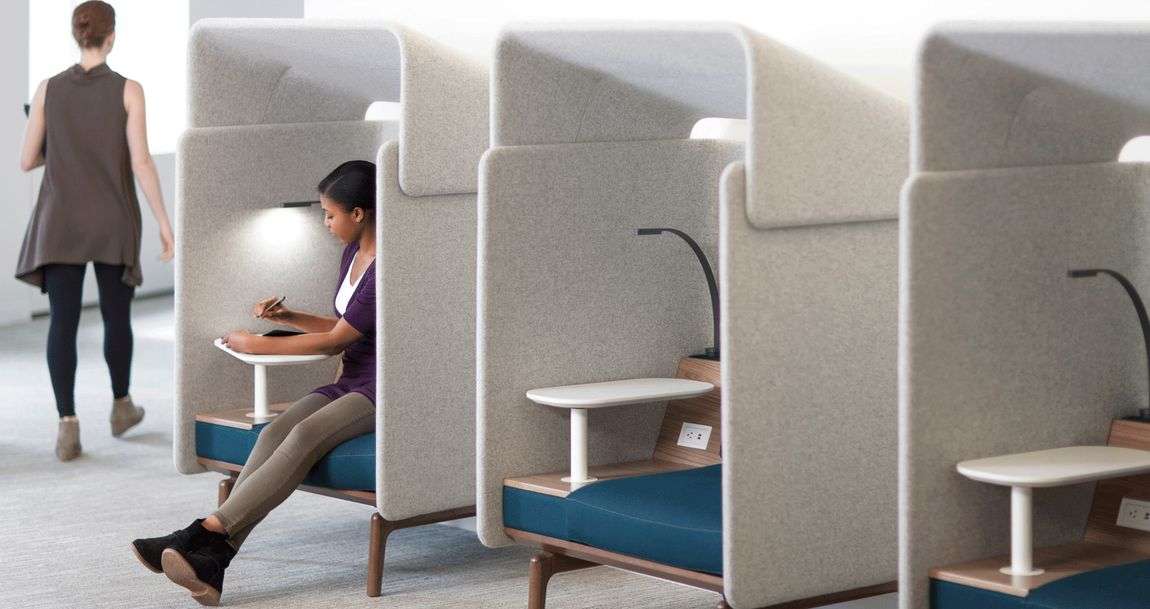
You don't necessarily need to replace all of your office furniture to improve acoustics. Start by identifying where noise is actually causing problems. Are employees struggling to concentrate near collaborative areas? Are video calls disrupting people working nearby? Are conference rooms allowing too much sound to escape? Are there areas where conversations tend to carry across the office?
Once you've identified the problem areas, you can determine which acoustic solutions make the most sense. For some offices, acoustic workstation screens may be enough. Others may benefit from privacy booths or phone booths. A large open space might benefit from acoustic room dividers or strategically placed upholstered furniture.
It's also worth considering the overall mix of materials in the office. Hard surfaces can contribute to sound reflection, while softer surfaces and sound-absorbing materials can help manage it. The best solution is often a combination of products rather than one single piece of furniture.
Designing a Better-Sounding Workplace
Good acoustic design starts with understanding how people actually use the office. An office isn't just a collection of desks. It's a combination of focused work areas, meeting spaces, collaboration zones, social spaces, and private areas. Each of those environments has different acoustic needs.
A collaborative lounge shouldn't necessarily be as quiet as a private workstation. A conference room needs a different level of privacy than a reception area. A phone booth serves a completely different purpose than an open workstation.
When acoustic considerations are included during the planning process, businesses can create a workplace that feels more intentional. And that's ultimately what acoustic furniture is about. It's not about eliminating every sound. It's about creating a workplace where sound is managed rather than left entirely to chance.
The Future of Office Acoustics
As workplaces continue to evolve, flexibility is becoming increasingly important. Hybrid work, video conferencing, collaborative spaces, smaller offices, and changing employee expectations are all influencing how businesses approach workplace design.
Acoustic furniture fits naturally into this evolution because many solutions are flexible and adaptable. Instead of relying exclusively on permanent walls and traditional private offices, businesses can use furniture to create different environments within the same footprint. That flexibility can be especially valuable for companies that expect their space requirements to change over time.
Creating a More Comfortable Office With StrongProject
The modern workplace needs to do more than simply provide employees with somewhere to sit. It needs to support concentration, collaboration, communication, privacy, and flexibility. Acoustic furniture can play an important role in making that possible.
From privacy booths and acoustic panels to high-back seating, workstation dividers, and collaborative furniture, there are numerous ways to incorporate sound management into an office without compromising its design.
Our goal is to help businesses create workspaces that work for the way people actually work today. Whether you're designing a new office, updating an existing workspace, or simply looking for ways to improve privacy and reduce distractions, the right combination of commercial office furniture can make a noticeable difference.
Want to learn more about office design trends? Check out these related posts from the StrongProject blog.
.png&w=750&q=75)


