



Modular Office Furniture: The Smart Investment for Growing Businesses
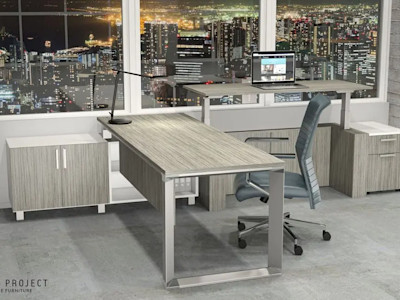
Growth is exciting for any business, but it also comes with a unique set of challenges. As organizations expand, teams evolve, departments shift, and workplace needs change almost overnight. The office layout that worked for a company with 20 employees may quickly become inefficient when the workforce grows to 50 or 100 people. This constant state of change has led many organizations to rethink their approach to workplace design and furniture investments. Instead of purchasing static furnishings that may become obsolete in a few years, businesses are increasingly turning to modular office furniture as a flexible, cost-effective solution that can adapt alongside their growth.
Modular Furniture Is An Investment

Modular office furniture has emerged as one of the most practical investments for modern organizations because it is designed with adaptability in mind. Unlike traditional office furniture systems that often require complete replacement when needs change, modular solutions consist of interchangeable components that can be rearranged, expanded, or reconfigured to accommodate new teams, different work styles, and evolving business objectives. Whether a company is hiring rapidly, implementing hybrid work policies, or redesigning departments to encourage collaboration, modular furniture allows organizations to make adjustments without the significant expense and disruption associated with full office renovations.
Scalability & Modular Furniture

One of the most compelling advantages of modular office furniture is its scalability. Growing businesses frequently face uncertainty regarding future staffing levels and space requirements. Investing heavily in fixed furniture layouts can create limitations and unnecessary expenses down the road. Modular systems, however, provide businesses with the ability to add workstations, storage components, collaborative seating, and privacy solutions as needed. This scalability ensures that organizations can continue maximizing their office space without repeatedly purchasing entirely new furniture collections.
Alleviate Financial Pressures
Financial considerations also make modular furniture an attractive option. Office renovations and furniture replacements can represent substantial capital expenditures, particularly for small and medium-sized businesses. According to workplace research from the International Facility Management Association (IFMA), furniture and interior modifications account for a significant portion of office renovation budgets. Modular furniture helps reduce these costs by extending the useful life of workplace assets. Rather than replacing entire systems when organizational changes occur, companies can simply reconfigure existing pieces or purchase additional components to meet new requirements. This flexibility translates into lower long-term costs and a stronger return on investment.
Modular Furniture is Easily Reconfigurable

In addition to reducing costs, modular office furniture minimizes downtime and operational disruption. Traditional office redesign projects can take weeks or even months to complete, often requiring employees to work remotely or in temporary spaces. Modular systems, on the other hand, can typically be reconfigured much more quickly. Workstations can be rearranged over a weekend, collaborative areas can be expanded in a matter of hours, and departments can be relocated with minimal interruption to productivity. For growing businesses that need to remain agile and responsive, this speed and convenience can provide a significant competitive advantage.
The Rise of Hybrid Work and Modular Furniture

The rise of hybrid work has further accelerated the demand for modular workplace solutions. Today's offices are no longer designed solely around assigned desks and individual workstations. Instead, many organizations are creating environments that support a variety of work styles, including focused individual tasks, team collaboration, virtual meetings, and informal interactions. Modular furniture enables businesses to easily transition between these functions. Mobile tables, reconfigurable seating arrangements, movable partitions, and adaptable workstations allow organizations to create dynamic spaces that serve multiple purposes throughout the workday.
Employee expectations have also changed considerably in recent years. Workers increasingly value flexibility, comfort, and environments that support both productivity and well-being. Research from Gallup has consistently shown that the workplace environment plays an important role in employee engagement and job satisfaction. Employees want access to spaces where they can collaborate with colleagues, find privacy when needed, and work in settings that support different tasks and preferences. Modular office furniture makes it easier for employers to deliver these experiences by creating workplaces that are responsive and employee-centered.
Space Saving & Utilization

Another major benefit of modular office furniture is improved space utilization. Commercial real estate costs continue to represent one of the largest expenses for many organizations. As a result, businesses are under increasing pressure to maximize every square foot of office space. Modular furniture systems can help organizations optimize layouts by reducing wasted space and making it easier to accommodate changing occupancy needs. Components can be rearranged to create additional workstations, larger collaboration areas, or private meeting zones without requiring costly construction projects. This ability to continuously adapt helps businesses derive greater value from their office footprint.
Collaboration and Modularity

Collaboration has become another critical consideration in workplace design. Modern organizations recognize that innovation often occurs through spontaneous interactions and cross-functional teamwork. However, traditional office layouts frequently struggle to support both collaboration and individual focus. Modular furniture provides a solution by allowing businesses to create versatile environments that balance these competing needs. Teams can quickly transform areas into brainstorming zones, project rooms, or quiet spaces depending on the task at hand. This flexibility encourages communication and creativity while still supporting concentration and productivity.
The Sustainability of Modular Furniture
Sustainability is another important factor influencing office furniture decisions. Many organizations are prioritizing environmentally responsible practices and seeking ways to reduce waste and extend the lifecycle of workplace assets. Modular office furniture aligns well with these sustainability goals. Because modular systems can be reconfigured and expanded rather than discarded, they generate less waste than traditional furniture solutions that may need complete replacement during office transitions. Additionally, many manufacturers are increasingly incorporating recycled materials and environmentally conscious production methods into their modular product offerings. For businesses pursuing sustainability initiatives or environmental certifications, modular furniture can contribute positively to these efforts.
The Influence of Modular Furniture on Culture

The ability to support organizational culture is another reason why modular office furniture has become such a valuable investment. Company culture is often reflected in the physical workplace. Businesses that value innovation, collaboration, transparency, and adaptability need environments that reinforce these principles. Modular furniture enables organizations to create spaces that evolve alongside their culture and strategic objectives. Whether introducing new collaborative hubs, implementing flexible seating arrangements, or creating dedicated focus zones, modular solutions help businesses align their physical environment with their organizational values.
The Advantage as You Grow

For startups and rapidly growing companies, modular office furniture can provide an especially valuable advantage. Young organizations often experience rapid shifts in staffing, organizational structure, and strategic priorities. Investing in traditional, fixed office furniture can create unnecessary financial burdens and limit future flexibility. Modular systems allow these businesses to scale efficiently while preserving capital and maintaining operational agility. Rather than attempting to predict long-term space needs, organizations can make incremental investments that align with their actual growth trajectory.
Even established organizations are increasingly recognizing the strategic value of modular furniture solutions. Economic uncertainty, changing workforce expectations, and evolving business models have demonstrated the importance of organizational resilience and adaptability. Companies that can quickly reconfigure their workplaces are often better positioned to respond to market changes, accommodate mergers or acquisitions, support new ways of working, and attract top talent. Modular furniture serves as an important tool in building this flexibility and long-term resilience.
Modular Office Furniture is here to Stay
As the workplace continues to evolve, businesses must prioritize agility and future readiness. Office environments are no longer static spaces designed to remain unchanged for decades. Instead, they are dynamic ecosystems that must continuously adapt to support changing teams, technologies, and work styles. Modular office furniture empowers organizations to embrace this reality by creating workplaces that are flexible, efficient, and built for growth.
For growing businesses seeking to maximize their investment while preparing for the future, modular office furniture is more than simply a design trend—it is a strategic business decision. By investing in adaptable workplace solutions today, organizations can create environments that support innovation, improve employee experiences, optimize resources, and remain responsive to whatever challenges and opportunities tomorrow may bring.
Want to learn more about StrongProject and modern office design? Check out these related posts:


