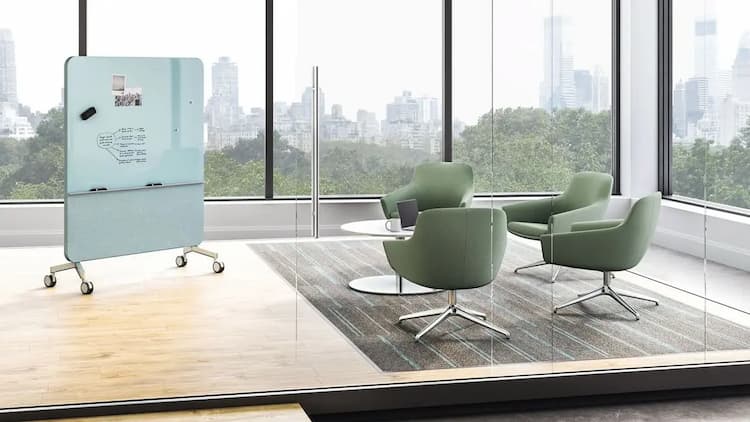
Modern Workstations Shaping Office Design

The modern workplace is undergoing a fundamental transformation, and at the center of it all is the workstation. No longer just a desk and chair, today’s workstation is a dynamic, adaptable environment designed to support how people actually work. As organizations continue to rethink the purpose of the office, workstation design has become a strategic lever for productivity, employee well-being, and organizational culture. What was once considered a functional necessity is now a critical component of performance and experience.
Workstations in the Hybrid Office
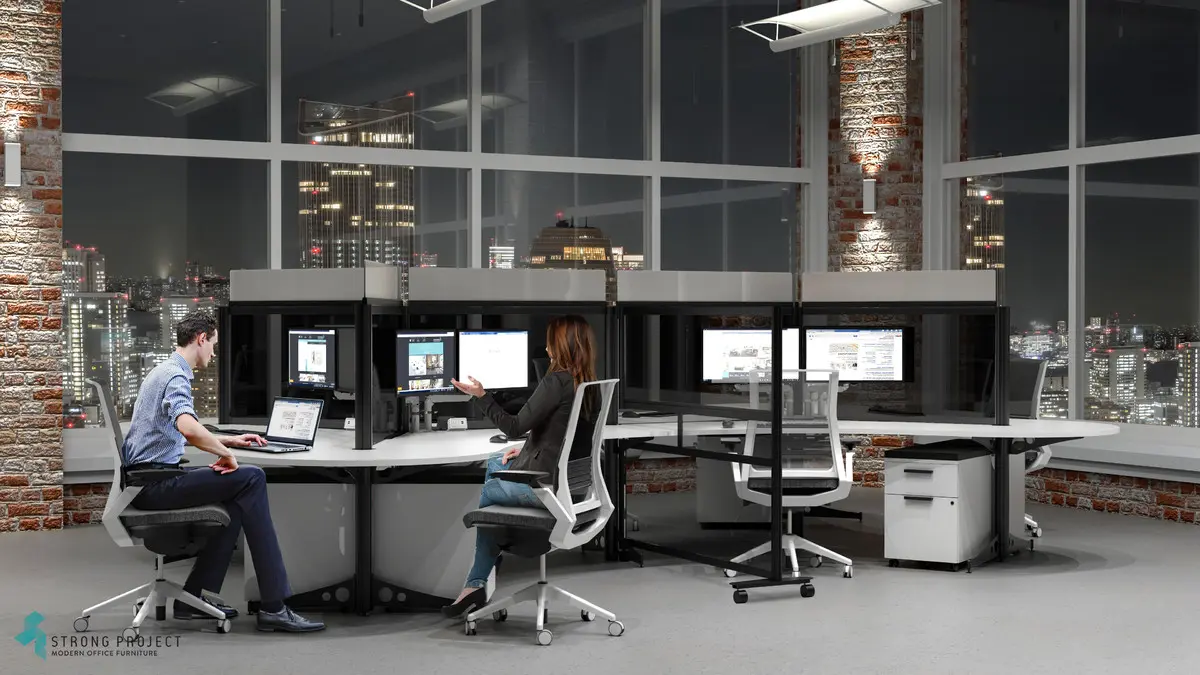
One of the most significant forces shaping workstation design is hybrid work. What began as a temporary adjustment has evolved into an expectation, fundamentally changing how offices are used. Employees now move fluidly between remote and in-office work, and workstations must support that flexibility. Instead of fixed seating arrangements, organizations are embracing shared desks, reconfigurable layouts, and environments that can easily shift between focused individual work and collaboration. Workplace trends are driving demand for more adaptable and technology-integrated workspaces, reinforcing the need for workstations that can serve multiple purposes throughout the day.
Flexible Workstations
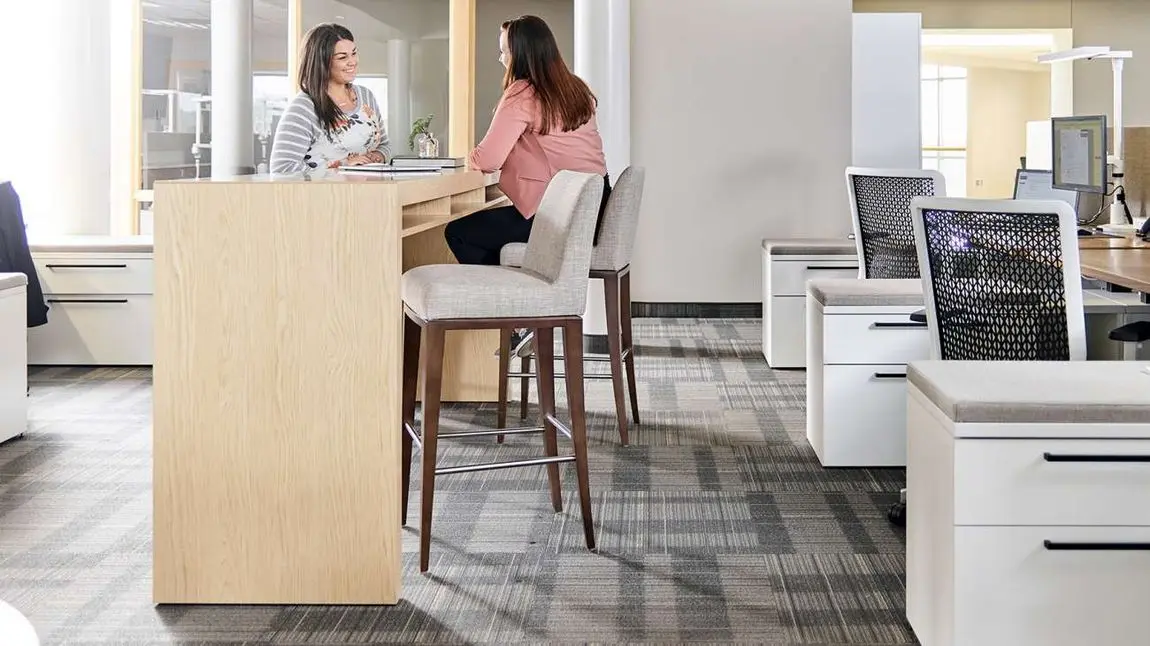
Flexibility extends beyond how people work; it also applies to how offices are built. Modular workstation systems are rapidly becoming the standard, allowing organizations to adapt their spaces without costly overhauls. These systems enable companies to scale teams, reorganize departments, and respond to changing business needs with minimal disruption. As highlighted in recent industry analyses, modular office furniture is growing in popularity because it provides long-term adaptability in an unpredictable business environment. This approach not only improves efficiency but also future-proofs the workplace against ongoing change.
Alongside flexibility, ergonomics has become a foundational element of workstation design. As employees spend extended periods at their desks, the impact of physical comfort on productivity and health has become impossible to ignore. Poor ergonomics has been directly linked to fatigue, discomfort, and reduced efficiency. In response, modern workstations increasingly feature height-adjustable desks, ergonomic seating, and accessories designed to promote proper posture. Sit-stand desks, in particular, have gained widespread adoption, with studies showing they can help reduce fatigue and improve focus over long work sessions. This shift signals a broader understanding that investing in employee comfort is also an investment in performance.
Tech-Integrated Workstations
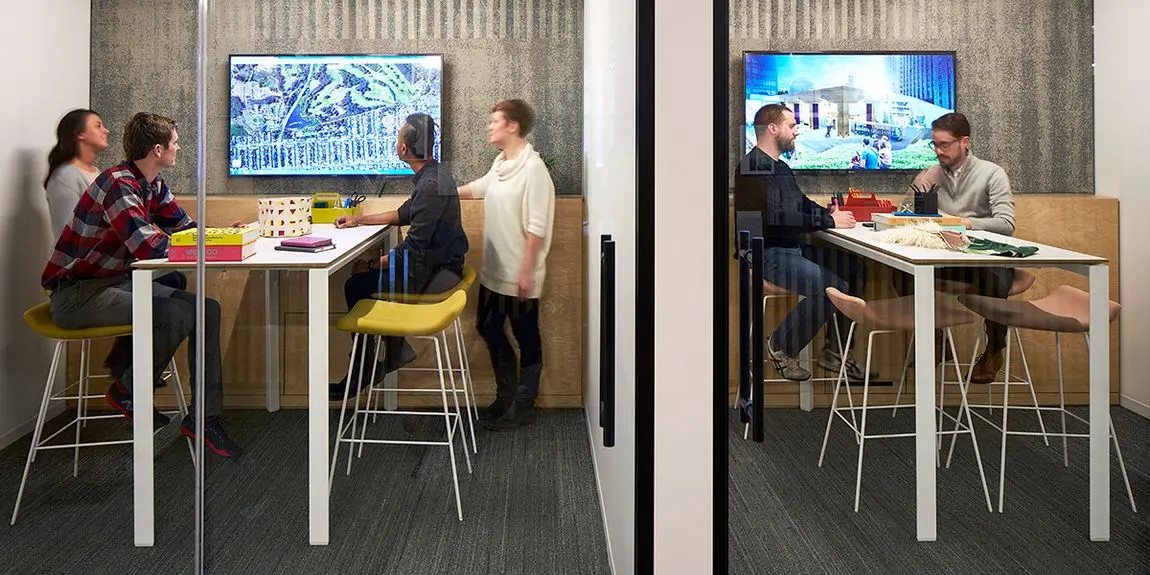
Technology integration is another defining trend shaping modern workstations. As digital workflows dominate, employees expect their physical environment to seamlessly support their tools. Today’s workstations are designed with built-in power access, wireless charging, and intuitive connectivity that simplifies transitions between tasks and meetings. The goal is to eliminate friction, reducing the time and effort required to stay connected and productive. Increasingly, organizations are also exploring smart workplace technologies that can personalize workstation settings or provide insights into space utilization, further enhancing efficiency.
At the same time, there has been a clear shift toward human-centered design. Rather than focusing solely on efficiency, organizations are prioritizing how employees experience their workspace. This means designing workstations that align with natural human behavior, supporting movement, accommodating different work styles, and offering a sense of control and comfort. Industry experts note that there is no longer a one-size-fits-all solution when it comes to workplace design, and successful environments are those that adapt to the diverse needs of their users. This shift reflects a broader cultural change in how organizations value employee experience.
Workstation Aesthetics
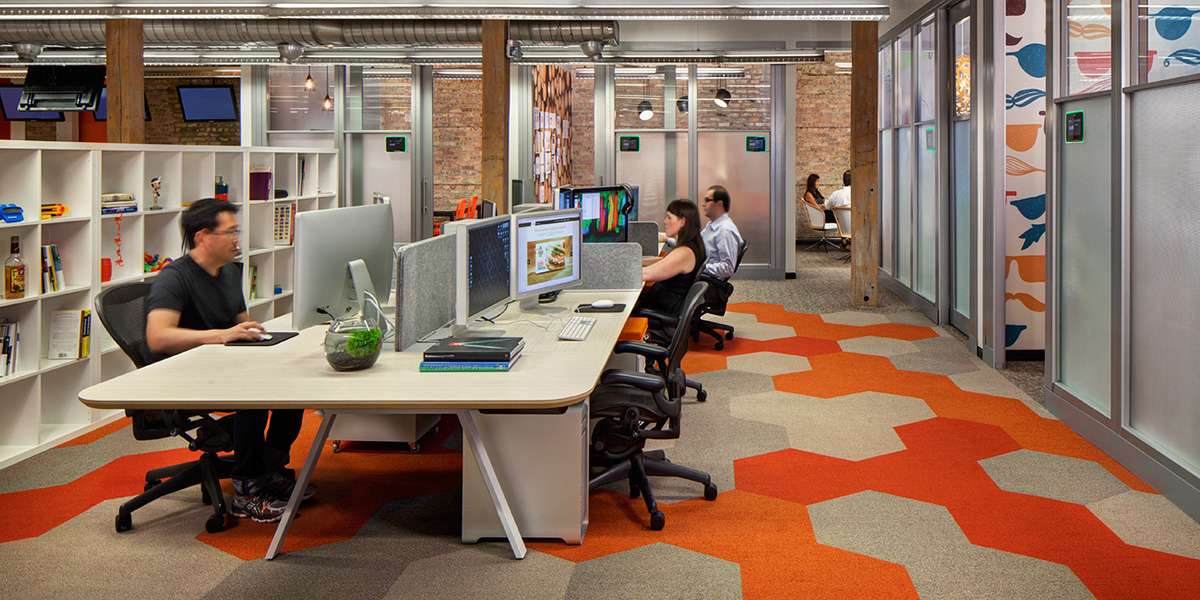
Aesthetic trends are also playing a role in shaping the future of workstations, particularly the continued rise of minimalist design. Clean lines, neutral color palettes, and clutter-free surfaces are now hallmarks of modern office environments. While this approach is visually appealing, it also serves a functional purpose. Research suggests that reducing visual clutter can help improve focus and reduce cognitive load, allowing employees to work more efficiently. By simplifying the workspace, organizations create environments that feel both calming and purposeful.
Sustainability has emerged as another key driver of workstation design decisions. Companies are increasingly prioritizing environmentally responsible materials and manufacturing processes, reflecting both ethical considerations and long-term cost efficiency. This includes the use of recycled materials, durable construction that reduces the need for frequent replacement, and low-emission finishes that contribute to healthier indoor environments. As sustainability becomes a core value for many organizations, workstation design serves as a visible representation of that commitment.
Employee Well-Being and Workstations
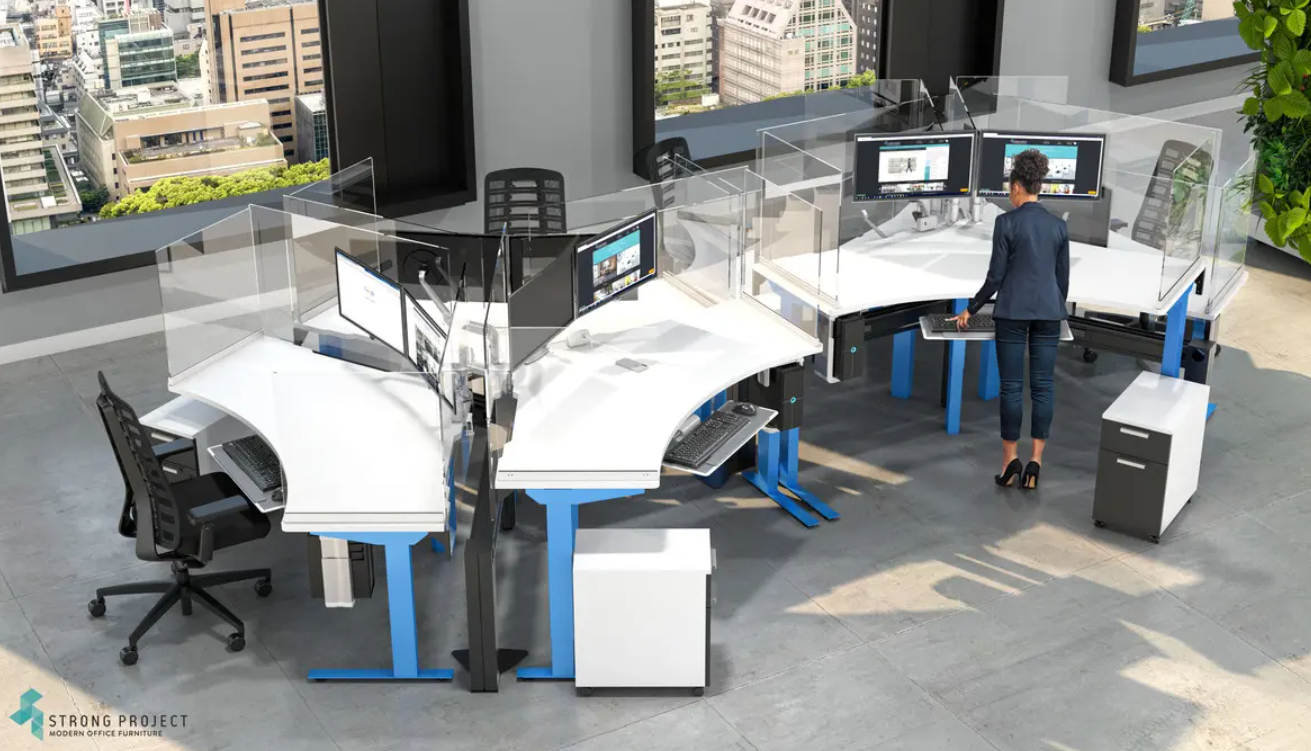
Beyond physical design, modern workstations are also being shaped by a growing focus on employee well-being and mental health. Organizations are recognizing that the workplace environment has a direct impact on how people feel and perform. As a result, workstation design now incorporates elements such as natural light, acoustic control, and biophilic features like plants and natural textures. Research has shown that environments incorporating natural elements can improve mood, reduce stress, and enhance overall workplace satisfaction. Additionally, providing a variety of work settings, from quiet focus areas to collaborative zones, allows employees to choose environments that best support their needs throughout the day.
Personalization is becoming increasingly important as well. Employees no longer expect to adapt to a fixed workstation; instead, they expect the workstation to adapt to them. Adjustable desks, customizable layouts, and flexible accessories allow individuals to create environments that align with their preferences and workflows. This level of control not only enhances comfort but also contributes to greater engagement and productivity. As technology continues to evolve, the potential for personalized workstations will only expand, offering even more tailored experiences.
The Future of Workstations
Ultimately, these trends point to a larger shift in how organizations view the office itself. The office is no longer just a place where work happens; it is a destination designed to support collaboration, creativity, and connection. Workstations play a critical role in this transformation, serving as the foundation for how employees interact with their environment. To remain relevant, offices must offer experiences that go beyond what employees can achieve at home, creating spaces that inspire and engage.
The future of office design is being shaped by the evolution of the workstation. Flexibility, ergonomics, technology integration, and human-centered design are no longer optional; they are essential components of a modern workplace. As organizations continue to adapt to new ways of working, the workstation will remain a key focal point for innovation. This presents an opportunity to lead the way in creating environments that not only meet the demands of today’s workforce but also anticipate the needs of tomorrow.
Want to learn more about modern workstations? Check out these posts from the StrongProject blog.
.png&w=750&q=75)