



5 Office Furniture Trends Shaping the Workplace
%2520%25E2%2580%2594%2520Scaled%2520(89%2525).png&w=1920&q=75)
The workplace has changed dramatically over the last several years. The days of filling a building with rows of identical desks, standard cubicles, and one oversized conference room are fading. Today’s offices need to support a much wider range of activities. Employees may come into the office to collaborate with coworkers, focus on an important project, jump on a video call, meet with a client, or simply work somewhere other than their kitchen table.
That means businesses are thinking differently about the furniture they buy. The biggest office furniture trends in 2026 are less about chasing a particular style and more about creating spaces that are flexible, comfortable, functional, and capable of adapting as the way we work continues to evolve. Recent workplace design research points especially toward adaptable layouts, stronger acoustic privacy, activity-based spaces, residential-inspired comfort, and furniture that better supports technology and hybrid work.
Here are five of the biggest office furniture trends shaping the workplace right now.
1. Flexible and Modular Furniture Is Replacing Fixed Layouts
.png)
One of the clearest trends in modern office design is flexibility. Businesses have learned that predicting exactly what an office will need five or even three years from now is difficult. Teams grow, departments change, hybrid schedules shift, and the way people use office space can evolve surprisingly quickly.
As a result, companies are moving away from furniture arrangements that are expensive or difficult to change. Instead, modular workstations, movable tables, flexible seating, mobile storage, and reconfigurable partitions are becoming increasingly important. The goal is to create an office that can change without requiring a major renovation every time the business changes.
Think about a conference area, for example. A traditional conference room may have one large table that serves one purpose: meetings. A more flexible approach might use modular tables that can be arranged into one large conference table, separated into smaller workstations, or moved aside to create space for a training session or company event.
The same thinking applies to workstations. Rather than permanently assigning every square foot to a specific employee or department, companies are creating adaptable neighborhoods that can expand, shrink, or change purpose as needed. Recent 2026 workplace design reporting consistently identifies modular planning and furniture that can be reconfigured as a major priority for offices navigating hybrid schedules and changing occupancy patterns.
For businesses, this trend is about more than convenience. Flexible furniture can help organizations get more out of the space they already have. Instead of designing an office around one fixed way of working, companies can create an environment that supports work throughout the day.
2. Acoustic Privacy Is Becoming Essential
.png)
Open offices were designed to encourage collaboration, but they also created a problem that anyone who has worked in one recognizes immediately: noise. It is difficult to focus when the person next to you is on a video call, another team is brainstorming across the room, and someone else is having an informal meeting nearby. Add hybrid work to the equation, where employees may spend much of the day on Zoom or Teams calls, and acoustic privacy becomes even more important.
That is why acoustic furniture and privacy solutions are among the biggest trends shaping offices in 2026. Workplace design is increasingly focused on giving people somewhere to escape distractions without requiring companies to build permanent walls or entirely redesign their floor plans.
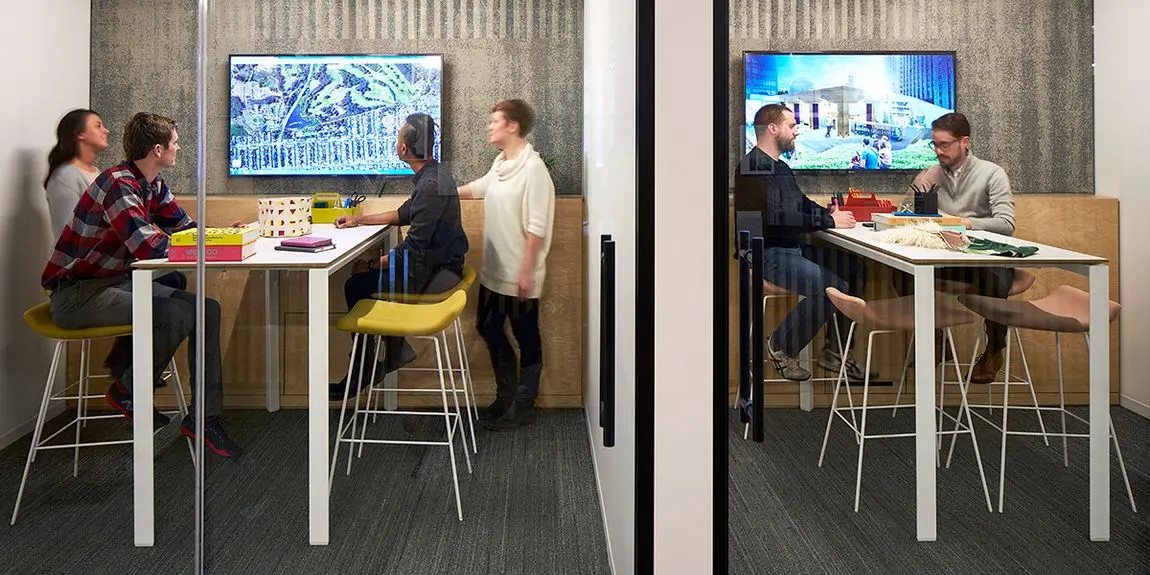
Office phone booths and meeting pods are a big part of this trend. These enclosed or semi-enclosed spaces give employees a place to take calls, participate in video meetings, or have private conversations without disrupting everyone around them.
But acoustic design goes beyond phone booths. High-backed lounge seating, acoustic panels, desk dividers, upholstered privacy screens, and sound-absorbing materials are also being incorporated directly into office furniture.
The important thing is that today's offices are not simply choosing between an open floor plan and a collection of private offices. Instead, many are creating a mix. Employees might work in an open collaborative area when they need to interact with their team, move to a quiet workstation when they need to concentrate, and use a phone booth when they need to take a call.
3. The Office Is Getting More Comfortable and Residential
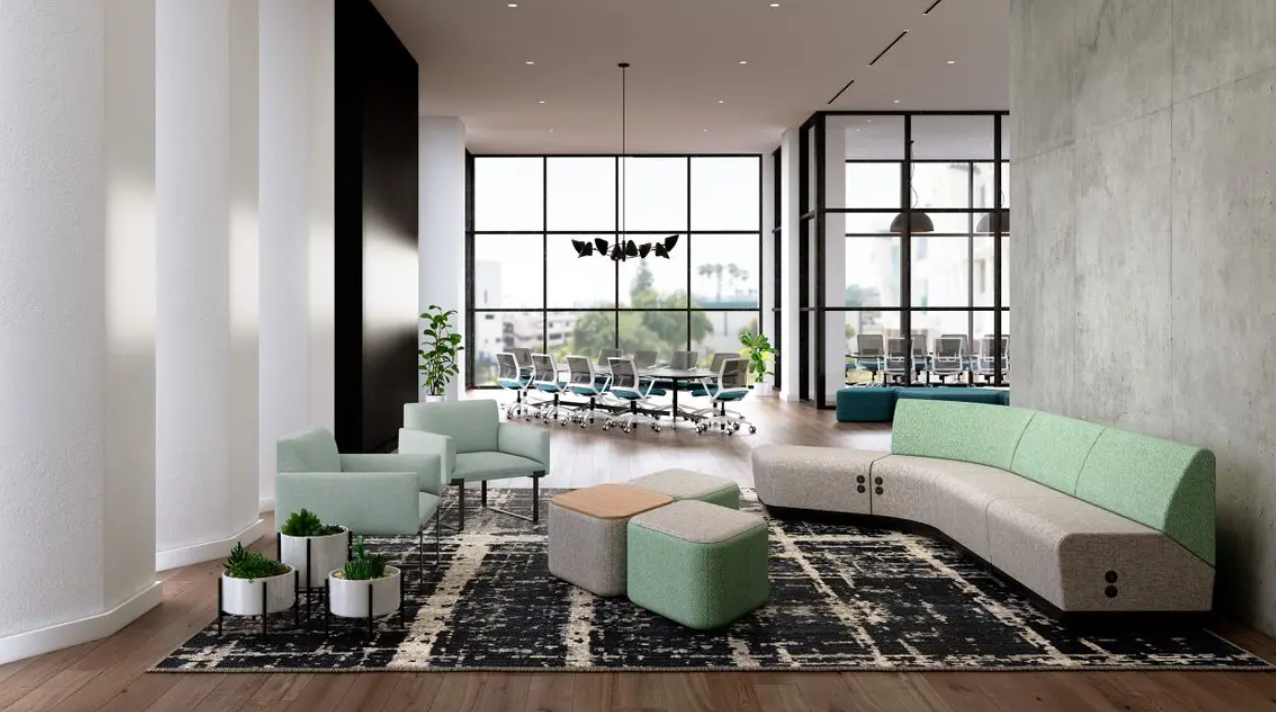
One of the strongest current trends blends the comfort and warmth of residential spaces with the durability and performance required in commercial environments. In practical terms, that means offices are incorporating more lounge seating, softer materials, warmer finishes, comfortable collaborative furniture, and spaces that feel less like traditional workplaces and more like places where people actually want to spend time.
This does not mean businesses are filling their offices with residential sofas and coffee tables. Commercial spaces still require furniture that can withstand daily use, meet performance requirements, and support the demands of a professional environment.
A break room might feel more like a café. A collaborative area might include comfortable lounge seating rather than only conference chairs. A reception area might feel more like a hospitality space than a waiting room. Even individual workspaces are becoming more focused on comfort and choice.
This trend is especially important because the office is now competing with home. Employees who have the flexibility to work remotely know what it is like to work from a comfortable, personalized environment. If coming into the office means spending the day in an uncomfortable chair under harsh lighting at an uninspiring desk, there is not much incentive to make the commute.
4. Activity-Based Workspaces Are Replacing One-Size-Fits-All Offices
.png)
Another major trend is the rise of activity-based workplace design. Instead of assuming that everyone should work at the same type of desk all day, offices are being designed around the different activities employees perform.
Someone writing a report needs something very different from a group of coworkers brainstorming ideas. A private client call requires a different setting than a casual conversation with a teammate. A training session requires different furniture than a quick one-on-one meeting.
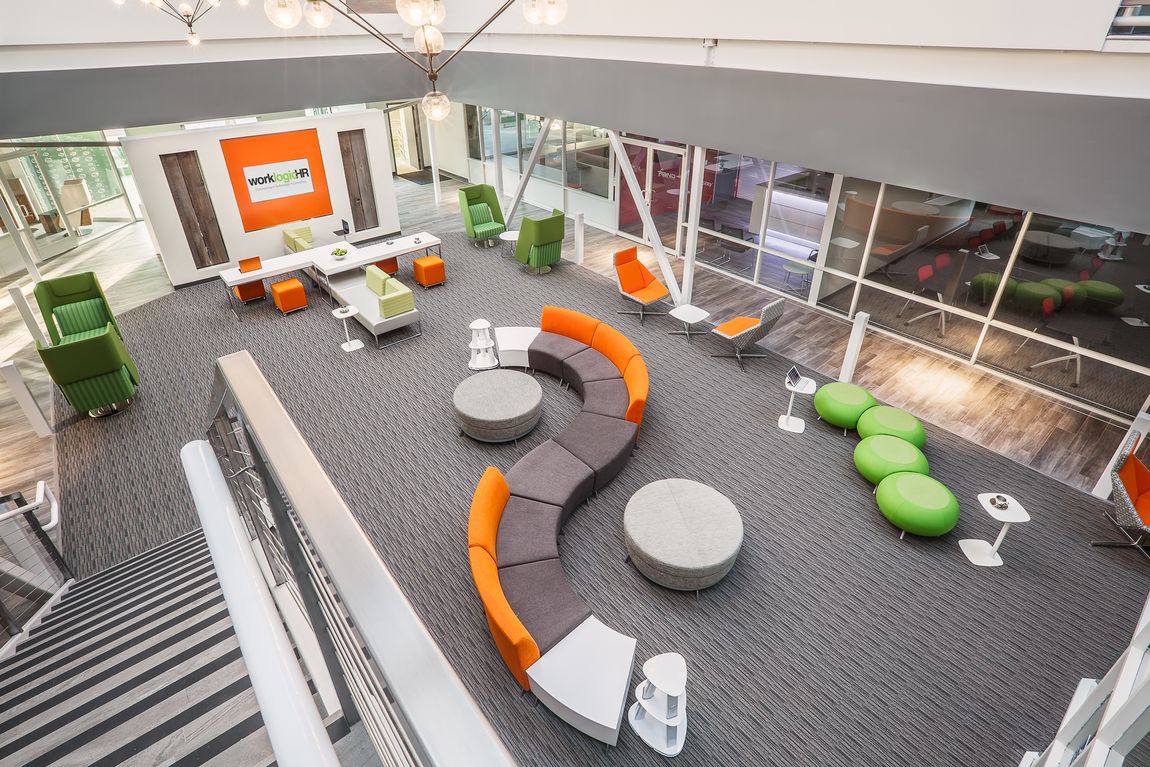
This is leading companies to create a wider variety of furniture settings within the same office. There may be quiet focus areas with individual workstations, collaborative zones with modular tables, lounge areas for informal conversations, small meeting spaces for two or three people, and enclosed rooms or pods for private calls.
Furniture is what makes these different zones possible. A well-designed office does not need to build a permanent room for every possible activity. The right combination of modular seating, collaborative furniture, acoustic pieces, movable tables, and private pods can create distinct spaces within an open environment.
5. Furniture Is Becoming More Technology-Ready
As hybrid work has become a permanent part of the workplace, employees need to be able to connect, charge, and collaborate from almost anywhere in the office. That means desks, conference tables, lounge seating, and collaborative spaces are increasingly designed with integrated power, USB and USB-C charging, cable management, and easier access to the technology employees use every day.
Anyone who has walked into a meeting room and immediately started searching under the conference table for the right cable understands why this matters.
Technology-ready furniture helps remove those little frustrations. The goal is to make the workplace more seamless. Employees should be able to sit down, connect their devices, and get to work without turning every meeting into a troubleshooting session.
This trend also supports more flexible offices. When people are no longer working at the same desk every day, each workstation needs to provide the tools they need. Integrated power and cable management make it easier for employees to move throughout the office without sacrificing functionality.
The Future of Office Furniture Is About Choice
Employees want choices about where they work, how they work, and what type of environment best supports the task in front of them. Businesses want choices, too. They want furniture that can adapt as teams change, layouts evolve, and workplace expectations continue to shift.
That is why the office furniture trends shaping 2026 are not centered on one particular desk style or color palette. The bigger movement is toward adaptable, people-focused environments.
Flexible and modular furniture gives businesses room to change. Acoustic solutions give employees the privacy they need to focus. Residential-inspired design makes the workplace more comfortable and inviting. Activity-based furniture creates spaces for different types of work. And integrated technology helps connect all of those spaces to the way people actually work today.
For businesses planning a new office or updating an existing one, the lesson is simple: do not buy furniture based only on what looks good in a showroom. Think about how your employees actually use the workplace.
Where do they collaborate? Where do they focus? Where do they take calls? Where do they meet? Where do they recharge?
The most successful offices in the years ahead will not necessarily be the ones with the trendiest furniture. They will be the ones designed to give people the right space for the work they need to do.
Want to learn more about modern office trends? Check out these related articles:
.png&w=750&q=75)


